Projects
At the New Media Lab, Graduate Center doctoral students and faculty members from a range of academic disciplines are given the opportunity to work in an interdisciplinary environment. They collaborative with NML staff, with each other, and with their advisors to use technology to develop innovative websites and tools in the digital humanities, sciences, and social sciences. See below for the list of current and earlier projects that have been developed at the New Media Lab.
Featured Project
Current Projects
- #LastNightInSweden

In February, 2017, Donald Trump falsely claimed that an unspecified tragedy had befallen Sweden the night before. While attempting to justify a ban on Muslims entering the US, he suggested that Middle Eastern refugees held hostage the European countries that offered them asylum. “Did you see what happened in Sweden?” He asked. “Sweden! Who would […]
Anna-Alexis Larsson, English
- The 15M process archives
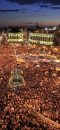
My project consists of a digital companion to my dissertation about contemporary Spanish cinema in dialogue with social movements. It features a catalog of film bits from interviews with filmmakers and philosophers. These videos are thematically organized according to contemporary events and linked to movie excerpts from the authors’ works. It will also incorporate a timeline tool with the possibility of linking pop-up videos, images and texts.
Pedro Cabello del Moral, Latin American, Iberian, and Latino Cultures
- Abolition Science Radio

Abolition Science Radio is the project of two Urban Education doctoral candidates, LaToya Strong and Atasi Das. This digital pedagogy project began in 2017 and is an open educational resource. The intention of this project is to, through public discourse, interrogate, and deconstruct existing notions of science and STEM education that perpetuate inequities while simultaneously reimagining the possibilities of an alternative approach to science and STEM education in society.
Atasi Das, Urban Education
- An Affective Technology of Heimat: Whiteness, Nation Building and Social Media in Germany

This dissertation examines the patterns of attachments and affective investments in Whiteness, objectifications, and exclusions entrenched in the construct of Heimat, which is broadly defined as “homeland” in German-speaking contexts. I use computational social science and discourse analytical methods to analyze how Heimat is discussed, embodied, and made sense of in affective ways on.
Friederike Windel, Critical Social Personality Psychology
- Algorithmic Love
By developing a web-scraping tool to access data about user behavior in dating apps, this project combines the algorithmic representations (interpretation) of the dataset with written reflections about the interactions with a dating app in order to explore the phenomenology and affective relationship between the human and the digital object. With this exploration, this project takes part in reassessing digital tools
Sandra Moyano Ariza, English
- The Bais Yaakov Project
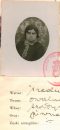
The Bais Yaakov Project is an archive of materials related to the Bais Yaakov movement from its beginning in Krakow through today. It features personal documents from Sarah Schenirer, school documents, images of schools and activities, songbooks and recordings, textbooks, yearbooks, etc. It also includes a map of Krakow with noteworthy locations, background information, and links to other resources.
Dainy Bernstein, English
- Betwyll and TwLetteratura: social reading and active reception

TwLetteratura and Betwyll promote social reading projects since 2012. They invented a methodology that combines traditional reading with digital resources. With my research, I want to study the outcomes of these projects in the light of the reception theory of the literary text. In doing so, I will rely on digital programs and tools that help me to organize and analyze the data I collected.
Iuri Moscardi, Comparative Literature
- BlabRyte

BlabRyte is a website that creates new opportunities for the study of private writing. Named from an anagram of Bartleby, BlabRyte enables students to build a writing practice and get credit for private writing. BlabRyte is additionally funded by a Provost Digital Innovation Grant.
Anna-Alexis Larsson, English
- Building a National Database on Fatal and Non-Fatal Police Shootings in the US, 2015

Yuchen Hou's dissertation research will use open sources to build a national database on fatal and non-fatal police shootings (FNFPS) where on-duty officers intentionally discharge their service firearms in the US in 2015. To make the findings available to broader audiences, his New Media Lab project aims to create a website that provides a searchable database on FNFPS in the US.
Yuchen Hou, Criminal Justice
- Café y Barismo: Open Educational Resource in Anthropology

Café y Barismo (Coffee and Barismo in Spanish) is a proposal to fulfill the Independent Study requirement for the Interactive Technology & Pedagogy (ITP) Certificate Program. Café y Barismo is a public-facing scholarship website and pedagogical teaching tool that can be used to teach Political Economy, Food, and Culture by using coffee production in Latin America
Joseph A. Torres-González, Anthropology
- The Central Intelligence Agency and CUNY: Empire, Knowledge Production, and the University

In March of 2018, it was made known that a Memorandum of Understanding (MoU) had been signed between the Central Intelligence Agency (CIA) and Baruch College. This memorandum established a formal partnership between the CIA and Baruch for “acquiring talent for the CIA’s diverse workforce.” My project seeks to gather information about this agreement and situate it within histories of imperialism and knowledge production in the university.
Marianne Madoré, Sociology
- Coloring Digital Annotations
This project consists of developing an annotation tool (from hypothes.is) to include multiple color functionality for the highlighter. I posit that adding multiple colors to the highlighter will encourage students to engage with affects and other nonverbalized feelings and reactions to reading. In this way, annotation may connects to knowledge as feeling, rather than knowledge as information that exists purely in a textual form.
Filipa Calado, English
- Critical Thinking for Language Teaching and Learning

I will post 4-6 blog entries on the theoretical content of the critical thinking perspective that I explored in the online course Critical Thinking in the Language Learning Classroom. Taking these as a foundation, the subsequent entries will verse on more grounded-common experiences, that is, everyday classroom situations that can be linked with the theoretical content developed in the core/theoretical entries.
Luis Bernardo Quesada, Latin American, Iberian, and Latino Cultures
- CUNY Digital History Archive

The CUNY Digital History Archive (CDHA) is a public digital archive that offers the CUNY community and the broader public online access to a range of archival materials on the history of the City University of New York. Faculty, staff, students, archivists, librarians, retirees, and alumni have contributed to the university's democratic mission and the CUNY Digital History Archive reflects those efforts.
Andrea Ades Vásquez, American Social History Project • Center for Media and Learning
- Digital Archive of the New York Women's Video Festivals

My project aims to create a digital archive of the 1970s New York Women’s Video Festivals (WVF). Organized by artist Susan Milano and hosted at the Kitchen, an avant-garde intermedia art center, the festivals represent a significant, but largely forgotten moment in feminist media. The digital archive will bring together videos from the artists and collectives involved in the festival, alongside agendas, reviews, and more recent artist interviews.
Helena Shaskevich, Art History
- Digital Writing//Digital Worlds
This site to hosts student projects from my first-year composition course, Digital Writing//Digital Worlds, at CUNY John Jay. Over the semester, students investigate how digital technologies influence how we express our identities, process information, build communities, and participate in activism. At the end of the course, students created public, multimedia projects building on ideas they’d developed during the semester—check them out!
Anna Zeemont, English
- Docbloc
Docbloc brings together artists working across documentary genres in theatre, film, photography for live performance collaborations. Founded in 2021 by Ph.D. Candidate Ash Marinaccio as a public humanities component to her dissertation work, Docbloc believes in the power of documentary storytelling and that solidarity is created when artistic movements are connected and collaborations are fostered.
Ashley Marinaccio, Theatre
- East Bay Punk Digital Archive
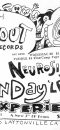
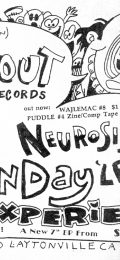
The East Bay Punk Archive is an open access resource that aims to preserve free and democratic access to the subjugated knowledge produced by several subcultural formations that emerged in the San Francisco Bay Area between the late-70s and mid-90s. Lawrence Livermore’s Lookout! plays a central role in this project, as it represents an extraordinary, previously unearthed, document of punk’s alternative modes of existence and access to knowledge.
Stefano Morello, English
- High-Value Men and Alt-Right Women

This project explores the banality of creating and maintaining the identity of alt-right womanhood, and the role of social media in fostering, policing, and supporting such growth. We explore this with the dataset from the sub-reddit, RedPillWomen, and examine their expressions of identities and consider how it engages with structures of power and oppression.
Di Yoong, Critical Social Personality Psychology
- History of Disability and the “600" Schools in New York City

This project focuses on the inception of specialized programs in New York City known as the "600" schools, for children classified as maladjusted, delinquent, or emotionally disturbed that operated from the 1940s to the 1970s. In the wake of Federal policies to integrate education in the U.S., the uneven distribution of these classifications among black and Puerto Rican students made these schools an effective tool for school segregation.
Francine Almash, Urban Education
- Identity discourses through online communities: A study on K-pop and Boys Love fandom
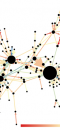
Through this project, I hope to understand the content of these users as it relates to identity formation (such as identifying gender expression) that is discussed online. I am interested in the interaction between the online discourses and the offline realities. I am using computational social science (Nelson, 2017) and critical discourse studies methods (van Leeuwen, 2006) to collect and analyze social media data.
Di Yoong, Critical Social Personality Psychology
- The Lung Block: A New York City Slum and Its Forgotten Italian Community
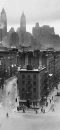
This online exhibition juxtaposes popular narratives around a city block on the Lower East Side cast as "the deadliest block in town" by progressive reformers with the lived experience of its Italian community. From the proposal to replace the block with a park in 1903 to the erection of Knickerbocker Village in 1933, I draw from a broad range of archives to expose motives and results of slum clearance efforts around the Lung Block.
Stefano Morello, English
- Magnetismo Sónico

Magnetismo Sónico is a public access digital archive showcasing and connecting the work of labels that edit music in cassette format in Latin America. It is an Omeka-run site that supports the work of independent labels media by harvesting the potentials and affordances of both analog and digital media. The site is centered around cassettes and labels, aiming to facilitate connections between cassette makers and enthusiasts.
Agustina Checa, Music
- Mapping the voices in 'Ni Una Menos' by Rebeca Lane
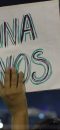
In 2015 Ni Una Menos emerged as one of the recent developments of the Latin American feminist movement that has gained important international recognition. Ni Una Menos is the name of the movement, chants in the streets, graffiti, drawings, lyrics, clothes, tattoos, and hashtags. It exemplifies the complexity of the interaction of offline-online spaces with…
Silvia Rivera Alfaro, Latin American, Iberian, and Latino Cultures
- Medievalisms on the Radio: A Premodern Podcast

This project builds literary interventions into medieval studies with an auditory one: a podcast focused on objects, ideas, and themes related to medieval culture that can be observed in New York City today. It is intended as a public humanities project with the intention of introducing more people to less widely known aspects of the medieval period, and their relevance to both non-scholars and academics today.
Emily Price, English
- Neighborhood Dynamics and Pandemic Effect on Restaurant Closings in New York City
This paper examines and compares the relationship between neighborhood dynamics and restaurant closings in New York City in a pre-pandemic, pandemic and post-pandemic era. What are the spatial patterns of restaurant closings? Which demographic, socioeconomic and mobility factors predict restaurant closings at neighborhood level? This study applies spatial analysis of restaurant closings in the three scenarios from 2019 to 2023.
Qiyao Pan, Sociology
- Platform Mediated Labor Management: Upwork, Fiverr and Amazon Mechanical Turk Workers’ Experience

Workers are entering the digital economy, or are being managed by digital technology. This project looks at how workers navigate the control of platforms, algorithms, and whether they form a community both online and offline to talk about their labor conditions. We plan to look at three different platforms: Amazon Mechanical Turk, Upwork and Fiverr, all of which provide workers with easy ways to find job in the algorithmic economy.
Nga Than, Sociology
- Podcast & Public Pedagogy

This website hosts student public pedagogy projects from the course Sociology of the Gig Economy, a graduate level course that examines different aspects of the gig economy at Hunter College. Students will investigate issues associated with gig work, and organization of work. During the semester, we will publish two public pedagogy projects: (1) a series of research summaries, (2) a one-season podcast series, titled Voices of the Gig Economy.
Nga Than, Sociology
- Podcast Production in an Undergraduate Classroom
Conceptualizing podcast production as a means for undergraduates to learn how to translate and produce psychological knowledge about non-conventional figures in psychologists. Project also encourages students to consider how socio-political-historical contexts impact the works of their chosen psychologists and through this consideration, reflect on how it relates to contemporary social issues.
Di Yoong, Critical Social Personality Psychology
- Points of Reference

Points of Reference is curated humanities content that arises in undergraduate media studies. Developed in the Interactive Technology and Pedagogy Certificate Program at the Graduate Center and at the New Media Lab, CUNY, its concept was initially inspired by my experience teaching Media Studies 101, Points of Reference features an interactive KnighLab JS3 Timeline with embedded video as both a digital pedagogical tool and proposed research alternative to Google Search. Ideation is copyright Carolyn A. McDonough, 2019, and in perpetuity.
Carolyn A. McDonough, Digital Humanities
- The Psychology of Pain-Based Solidarity: Locating Fluctuating Solidarity in the Path from Victimhood to Resistance

Heavily reliant on Frantz Fanon’s decolonial theorizations on violence, the main conceptual aim of this project is to provide a closer investigation of what we call “pain-based solidarity”. This concept refers to solidarity granted to the victims of systemic violence that is conditional on them being in pain—We argue that this type of solidarity has […]
Ghina Abi-Ghannam, Critical Social Personality Psychology
- Queer Intimacies: Homonormative Online Dating

Imagine, for a moment, portraying the best representation of yourself with a profile that only allows 15 characters for a screen name, and 250 characters to describe yourself. Challenging, right? Romantic pursuits have been revolutionized by geolocation-based dating applications. In the case of homonormative dating, apps such as: Grindr, Scruff, and Jack’d have commodified filtering…
Davine Sorapuru-Edwards, Anthropology
- Recalibrating Queens
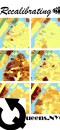
Recalibrating Queens is a digital history and activist scholarship project focused on publicly excavating and exploring the past century of development and change in western Queens. It was developed in tandem with my work with the Justice For All Coalition and the development of my dissertation research titled, "Re(sident)-Centering the Housing Debate in Western Queens."
Kristen Hackett, Environmental Psychology
- Rendering inhabitable the nonhuman temporality of the digital culture
Digital culture opened up new possibilities of experiencing time. Complicating linear narrative of acceleration, famously put by Marx as annihilation of space by time, I argue in my dissertation project that the past have become the material of emerging forms of recollection that are rhythmic as in the popular form of #TBT (Throwback Thursdays), future…
Talha Issevenler, Sociology
- Right to Parent

Right to Parent is an organization committed to supporting and advocating for parents who leave strict religious marriages and communities. Leaving any marriage is a fraught experience, but the process of leaving a strict religious marriage and community poses unique challenges. In some cases the religious community mobilizes against the parent who leaves, and even close family members may turn against that parent. Divorce becomes more isolating for these parents than the experience normally is, as they lose their family and former community in the process.
Miriam Moster, Sociology
- Silences of NY History: Legacies of The New York Slave Revolt of 1712
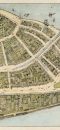
My capstone will be digital timeline and resource guide that will highlight the historical and social context around the New York Slave Revolt of 1712 with the purpose of unpacking and acknowledging the presence of African slavery in New York City being the source of the city's culture and economic success. In the future I plan to extend this timeline with other untaught black historical events through theme of racial discrimination in the city.
Jelissa Caldwell, Liberal Studies
- The Social World of Gab: Hate Speech, Misinformation, and Online Extremism

Alternative Discourses seeks to understand the recent rise of the alt-right, a decentralized right-leaning movement that began largely in North America, and its intersection with emerging technology, particularly with the global social media ecosystem (Daniels, 2018; Stern, 2019). Specifically, the project focuses on discourses produced by the users on Gab, a social media platform that promises little to no content moderation.
Nga Than, Sociology
- Stage Left - a documentary web series about theatre and community
Stage Left is a new web series that explores how theatre and performance function in various communities locally and globally. Each episode of "Stage Left" investigates a theatre company, performance tradition or performative ritual that is actively steeped in a particular community or working to enact some kind of social change. This web series asks the question, what can theatre and performance do in "times like these"?
Ashley Marinaccio, Theatre
- Virtually Augmented Social Skills Training

The aim of this project is to create an environment to teach social skills to individuals with high functioning autism. The use of a virtual environment is hypothesized to enhance the intervention's generalization to new settings and each participant's understanding of when and how to apply social skills. This project will culminate in the construction of a virtual environment in Second Life™ as part of the doctoral dissertation project.
Kevin Ambrose, Educational Psychology
- The Virtual Swirl: Images of #Interracial Couples on Instagram
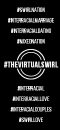
While there are billions of images on Instagram that warrant scholarly attention, this study is concerned with one particular type of posted image: that of the interracial couple. I examine how interracial couples are being digitally performed, (re)constructed, interpreted, and consumed on Instagram using a multi-method approach that includes online ethnography, digital content analysis, and online interviews.
Christie Sillo, Sociology
- VisDepot: An Introductory Resource for Data Visualization

For the Vis Depot project I am creating an OER for those who want to learn data visualization concepts, but have either very little or no background in coding or visualization. Vis Depot will serve as a curated and critical repository of useful previously existing and freely available tools and tutorials, as well as some specifically designed tutorials and overviews, to get introductory and non-technical students engaged with visualization.
Nicole Cote, English
- Visualizing Graduate Assistants' Workload

Olivia is tracking the workload of graduate assistants across job roles and departments. The data will be used to inform the Graduate Center PSC chapter’s negotiations around equitable workloads and fair labor practices, including negotiations in labor management meetings, grievance arbitration, and contract bargaining. While all workers in a given graduate assistant title (such as […]
Olivia Wood, English
- Visualizing the Victorian Sportswoman
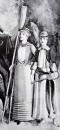
This project uses Omeka to curate and annotate images of the Victorian Sportswoman extracted from nineteenth-century periodicals. I investigate how iconography of the Sportswoman both aligns with and transgresses mainstream models for Victorian femininity. The project functions as a presentation space for generating critical conversations around the images and as a tool for teaching that fosters critical thinking about representations of women.
Julia Fuller, English
- VR for Experiential Research and Archiving
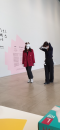
In my project “VR for Experiential Research and Archiving,” I will use VR in two ways. In addition to exploring how artists use VR in their performances, I will deploy VR as a method to explore, expand, and examine theoretical questions relating to VR. I will conduct a series of interviews with VR artists via “social VR” platforms (e.g., Altspace VR, VR Chat, or Spatial).
Kyueun Kim, Theatre
- Whiteness as a Technology of Affect in German Digital Spaces
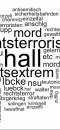
This project examines the discursive constructions of whiteness in German digital spaces and in everyday speech by focusing on the affective and embodied technologies of whiteness. It will utilize data from digital spaces and focus groups. The first investigation of German online discourses is on #Halle that has circulated on Twitter since a white nationalist killed two people and attacked a synagogue in East Germany.
Friederike Windel, Critical Social Personality Psychology
- Women of Color Archive (WOCArchive)
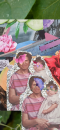
The Women of Color Archive (WOCArchive) is an intergenerational aural & visual based storytelling project that seeks to preserve the stories of our matriarchs, femmes, and non-binary folks of color. Founded in 2016 after an interview with my abuelita Aida, the WOCArchive continued to grow through a high school Ethnic Studies course centering women and gender expansive people of color […]
wendy barrales, Urban Education
American Social History Project • Center for Media and Learning
- CUNY Digital History Archive
The CUNY Digital History Archive (CDHA) is a public digital archive that offers the CUNY community and the broader public online access to a range of archival materials on the history of the City University of New York. Faculty, staff, students, archivists, librarians, retirees, and alumni have contributed to the university's democratic mission and the CUNY Digital History Archive reflects those efforts.
Andrea Ades Vásquez, American Social History Project • Center for Media and Learning
Anthropology
- Café y Barismo: Open Educational Resource in Anthropology
Café y Barismo (Coffee and Barismo in Spanish) is a proposal to fulfill the Independent Study requirement for the Interactive Technology & Pedagogy (ITP) Certificate Program. Café y Barismo is a public-facing scholarship website and pedagogical teaching tool that can be used to teach Political Economy, Food, and Culture by using coffee production in Latin America
Joseph A. Torres-González, Anthropology
- Queer Intimacies: Homonormative Online Dating
Imagine, for a moment, portraying the best representation of yourself with a profile that only allows 15 characters for a screen name, and 250 characters to describe yourself. Challenging, right? Romantic pursuits have been revolutionized by geolocation-based dating applications. In the case of homonormative dating, apps such as: Grindr, Scruff, and Jack’d have commodified filtering…
Davine Sorapuru-Edwards, Anthropology
Art History
- Digital Archive of the New York Women's Video Festivals
My project aims to create a digital archive of the 1970s New York Women’s Video Festivals (WVF). Organized by artist Susan Milano and hosted at the Kitchen, an avant-garde intermedia art center, the festivals represent a significant, but largely forgotten moment in feminist media. The digital archive will bring together videos from the artists and collectives involved in the festival, alongside agendas, reviews, and more recent artist interviews.
Helena Shaskevich, Art History
Comparative Literature
- Betwyll and TwLetteratura: social reading and active reception
TwLetteratura and Betwyll promote social reading projects since 2012. They invented a methodology that combines traditional reading with digital resources. With my research, I want to study the outcomes of these projects in the light of the reception theory of the literary text. In doing so, I will rely on digital programs and tools that help me to organize and analyze the data I collected.
Iuri Moscardi, Comparative Literature
Criminal Justice
- Building a National Database on Fatal and Non-Fatal Police Shootings in the US, 2015
Yuchen Hou's dissertation research will use open sources to build a national database on fatal and non-fatal police shootings (FNFPS) where on-duty officers intentionally discharge their service firearms in the US in 2015. To make the findings available to broader audiences, his New Media Lab project aims to create a website that provides a searchable database on FNFPS in the US.
Yuchen Hou, Criminal Justice
Critical Social Personality Psychology
- An Affective Technology of Heimat: Whiteness, Nation Building and Social Media in Germany
This dissertation examines the patterns of attachments and affective investments in Whiteness, objectifications, and exclusions entrenched in the construct of Heimat, which is broadly defined as “homeland” in German-speaking contexts. I use computational social science and discourse analytical methods to analyze how Heimat is discussed, embodied, and made sense of in affective ways on.
Friederike Windel, Critical Social Personality Psychology
- High-Value Men and Alt-Right Women
This project explores the banality of creating and maintaining the identity of alt-right womanhood, and the role of social media in fostering, policing, and supporting such growth. We explore this with the dataset from the sub-reddit, RedPillWomen, and examine their expressions of identities and consider how it engages with structures of power and oppression.
Di Yoong, Critical Social Personality Psychology
- Identity discourses through online communities: A study on K-pop and Boys Love fandom
Through this project, I hope to understand the content of these users as it relates to identity formation (such as identifying gender expression) that is discussed online. I am interested in the interaction between the online discourses and the offline realities. I am using computational social science (Nelson, 2017) and critical discourse studies methods (van Leeuwen, 2006) to collect and analyze social media data.
Di Yoong, Critical Social Personality Psychology
- Podcast Production in an Undergraduate Classroom
Conceptualizing podcast production as a means for undergraduates to learn how to translate and produce psychological knowledge about non-conventional figures in psychologists. Project also encourages students to consider how socio-political-historical contexts impact the works of their chosen psychologists and through this consideration, reflect on how it relates to contemporary social issues.
Di Yoong, Critical Social Personality Psychology
- The Psychology of Pain-Based Solidarity: Locating Fluctuating Solidarity in the Path from Victimhood to Resistance
Heavily reliant on Frantz Fanon’s decolonial theorizations on violence, the main conceptual aim of this project is to provide a closer investigation of what we call “pain-based solidarity”. This concept refers to solidarity granted to the victims of systemic violence that is conditional on them being in pain—We argue that this type of solidarity has […]
Ghina Abi-Ghannam, Critical Social Personality Psychology
- Whiteness as a Technology of Affect in German Digital Spaces
This project examines the discursive constructions of whiteness in German digital spaces and in everyday speech by focusing on the affective and embodied technologies of whiteness. It will utilize data from digital spaces and focus groups. The first investigation of German online discourses is on #Halle that has circulated on Twitter since a white nationalist killed two people and attacked a synagogue in East Germany.
Friederike Windel, Critical Social Personality Psychology
Digital Humanities
- Points of Reference
Points of Reference is curated humanities content that arises in undergraduate media studies. Developed in the Interactive Technology and Pedagogy Certificate Program at the Graduate Center and at the New Media Lab, CUNY, its concept was initially inspired by my experience teaching Media Studies 101, Points of Reference features an interactive KnighLab JS3 Timeline with embedded video as both a digital pedagogical tool and proposed research alternative to Google Search. Ideation is copyright Carolyn A. McDonough, 2019, and in perpetuity.
Carolyn A. McDonough, Digital Humanities
Educational Psychology
- Virtually Augmented Social Skills Training
The aim of this project is to create an environment to teach social skills to individuals with high functioning autism. The use of a virtual environment is hypothesized to enhance the intervention's generalization to new settings and each participant's understanding of when and how to apply social skills. This project will culminate in the construction of a virtual environment in Second Life™ as part of the doctoral dissertation project.
Kevin Ambrose, Educational Psychology
English
- #LastNightInSweden
In February, 2017, Donald Trump falsely claimed that an unspecified tragedy had befallen Sweden the night before. While attempting to justify a ban on Muslims entering the US, he suggested that Middle Eastern refugees held hostage the European countries that offered them asylum. “Did you see what happened in Sweden?” He asked. “Sweden! Who would […]
Anna-Alexis Larsson, English
- Algorithmic Love
By developing a web-scraping tool to access data about user behavior in dating apps, this project combines the algorithmic representations (interpretation) of the dataset with written reflections about the interactions with a dating app in order to explore the phenomenology and affective relationship between the human and the digital object. With this exploration, this project takes part in reassessing digital tools
Sandra Moyano Ariza, English
- The Bais Yaakov Project
The Bais Yaakov Project is an archive of materials related to the Bais Yaakov movement from its beginning in Krakow through today. It features personal documents from Sarah Schenirer, school documents, images of schools and activities, songbooks and recordings, textbooks, yearbooks, etc. It also includes a map of Krakow with noteworthy locations, background information, and links to other resources.
Dainy Bernstein, English
- BlabRyte
BlabRyte is a website that creates new opportunities for the study of private writing. Named from an anagram of Bartleby, BlabRyte enables students to build a writing practice and get credit for private writing. BlabRyte is additionally funded by a Provost Digital Innovation Grant.
Anna-Alexis Larsson, English
- Coloring Digital Annotations
This project consists of developing an annotation tool (from hypothes.is) to include multiple color functionality for the highlighter. I posit that adding multiple colors to the highlighter will encourage students to engage with affects and other nonverbalized feelings and reactions to reading. In this way, annotation may connects to knowledge as feeling, rather than knowledge as information that exists purely in a textual form.
Filipa Calado, English
- Digital Writing//Digital Worlds
This site to hosts student projects from my first-year composition course, Digital Writing//Digital Worlds, at CUNY John Jay. Over the semester, students investigate how digital technologies influence how we express our identities, process information, build communities, and participate in activism. At the end of the course, students created public, multimedia projects building on ideas they’d developed during the semester—check them out!
Anna Zeemont, English
- East Bay Punk Digital Archive
The East Bay Punk Archive is an open access resource that aims to preserve free and democratic access to the subjugated knowledge produced by several subcultural formations that emerged in the San Francisco Bay Area between the late-70s and mid-90s. Lawrence Livermore’s Lookout! plays a central role in this project, as it represents an extraordinary, previously unearthed, document of punk’s alternative modes of existence and access to knowledge.
Stefano Morello, English
- The Lung Block: A New York City Slum and Its Forgotten Italian Community
This online exhibition juxtaposes popular narratives around a city block on the Lower East Side cast as "the deadliest block in town" by progressive reformers with the lived experience of its Italian community. From the proposal to replace the block with a park in 1903 to the erection of Knickerbocker Village in 1933, I draw from a broad range of archives to expose motives and results of slum clearance efforts around the Lung Block.
Stefano Morello, English
- Medievalisms on the Radio: A Premodern Podcast
This project builds literary interventions into medieval studies with an auditory one: a podcast focused on objects, ideas, and themes related to medieval culture that can be observed in New York City today. It is intended as a public humanities project with the intention of introducing more people to less widely known aspects of the medieval period, and their relevance to both non-scholars and academics today.
Emily Price, English
- VisDepot: An Introductory Resource for Data Visualization
For the Vis Depot project I am creating an OER for those who want to learn data visualization concepts, but have either very little or no background in coding or visualization. Vis Depot will serve as a curated and critical repository of useful previously existing and freely available tools and tutorials, as well as some specifically designed tutorials and overviews, to get introductory and non-technical students engaged with visualization.
Nicole Cote, English
- Visualizing Graduate Assistants' Workload
Olivia is tracking the workload of graduate assistants across job roles and departments. The data will be used to inform the Graduate Center PSC chapter’s negotiations around equitable workloads and fair labor practices, including negotiations in labor management meetings, grievance arbitration, and contract bargaining. While all workers in a given graduate assistant title (such as […]
Olivia Wood, English
- Visualizing the Victorian Sportswoman
This project uses Omeka to curate and annotate images of the Victorian Sportswoman extracted from nineteenth-century periodicals. I investigate how iconography of the Sportswoman both aligns with and transgresses mainstream models for Victorian femininity. The project functions as a presentation space for generating critical conversations around the images and as a tool for teaching that fosters critical thinking about representations of women.
Julia Fuller, English
Environmental Psychology
- Recalibrating Queens
Recalibrating Queens is a digital history and activist scholarship project focused on publicly excavating and exploring the past century of development and change in western Queens. It was developed in tandem with my work with the Justice For All Coalition and the development of my dissertation research titled, "Re(sident)-Centering the Housing Debate in Western Queens."
Kristen Hackett, Environmental Psychology
Latin American, Iberian, and Latino Cultures
- The 15M process archives
My project consists of a digital companion to my dissertation about contemporary Spanish cinema in dialogue with social movements. It features a catalog of film bits from interviews with filmmakers and philosophers. These videos are thematically organized according to contemporary events and linked to movie excerpts from the authors’ works. It will also incorporate a timeline tool with the possibility of linking pop-up videos, images and texts.
Pedro Cabello del Moral, Latin American, Iberian, and Latino Cultures
- Critical Thinking for Language Teaching and Learning
I will post 4-6 blog entries on the theoretical content of the critical thinking perspective that I explored in the online course Critical Thinking in the Language Learning Classroom. Taking these as a foundation, the subsequent entries will verse on more grounded-common experiences, that is, everyday classroom situations that can be linked with the theoretical content developed in the core/theoretical entries.
Luis Bernardo Quesada, Latin American, Iberian, and Latino Cultures
- Mapping the voices in 'Ni Una Menos' by Rebeca Lane
In 2015 Ni Una Menos emerged as one of the recent developments of the Latin American feminist movement that has gained important international recognition. Ni Una Menos is the name of the movement, chants in the streets, graffiti, drawings, lyrics, clothes, tattoos, and hashtags. It exemplifies the complexity of the interaction of offline-online spaces with…
Silvia Rivera Alfaro, Latin American, Iberian, and Latino Cultures
Liberal Studies
- Silences of NY History: Legacies of The New York Slave Revolt of 1712
My capstone will be digital timeline and resource guide that will highlight the historical and social context around the New York Slave Revolt of 1712 with the purpose of unpacking and acknowledging the presence of African slavery in New York City being the source of the city's culture and economic success. In the future I plan to extend this timeline with other untaught black historical events through theme of racial discrimination in the city.
Jelissa Caldwell, Liberal Studies
Music
- Magnetismo Sónico
Magnetismo Sónico is a public access digital archive showcasing and connecting the work of labels that edit music in cassette format in Latin America. It is an Omeka-run site that supports the work of independent labels media by harvesting the potentials and affordances of both analog and digital media. The site is centered around cassettes and labels, aiming to facilitate connections between cassette makers and enthusiasts.
Agustina Checa, Music
Sociology
- The Central Intelligence Agency and CUNY: Empire, Knowledge Production, and the University
In March of 2018, it was made known that a Memorandum of Understanding (MoU) had been signed between the Central Intelligence Agency (CIA) and Baruch College. This memorandum established a formal partnership between the CIA and Baruch for “acquiring talent for the CIA’s diverse workforce.” My project seeks to gather information about this agreement and situate it within histories of imperialism and knowledge production in the university.
Marianne Madoré, Sociology
- Neighborhood Dynamics and Pandemic Effect on Restaurant Closings in New York City
This paper examines and compares the relationship between neighborhood dynamics and restaurant closings in New York City in a pre-pandemic, pandemic and post-pandemic era. What are the spatial patterns of restaurant closings? Which demographic, socioeconomic and mobility factors predict restaurant closings at neighborhood level? This study applies spatial analysis of restaurant closings in the three scenarios from 2019 to 2023.
Qiyao Pan, Sociology
- Platform Mediated Labor Management: Upwork, Fiverr and Amazon Mechanical Turk Workers’ Experience
Workers are entering the digital economy, or are being managed by digital technology. This project looks at how workers navigate the control of platforms, algorithms, and whether they form a community both online and offline to talk about their labor conditions. We plan to look at three different platforms: Amazon Mechanical Turk, Upwork and Fiverr, all of which provide workers with easy ways to find job in the algorithmic economy.
Nga Than, Sociology
- Podcast & Public Pedagogy
This website hosts student public pedagogy projects from the course Sociology of the Gig Economy, a graduate level course that examines different aspects of the gig economy at Hunter College. Students will investigate issues associated with gig work, and organization of work. During the semester, we will publish two public pedagogy projects: (1) a series of research summaries, (2) a one-season podcast series, titled Voices of the Gig Economy.
Nga Than, Sociology
- Rendering inhabitable the nonhuman temporality of the digital culture
Digital culture opened up new possibilities of experiencing time. Complicating linear narrative of acceleration, famously put by Marx as annihilation of space by time, I argue in my dissertation project that the past have become the material of emerging forms of recollection that are rhythmic as in the popular form of #TBT (Throwback Thursdays), future…
Talha Issevenler, Sociology
- Right to Parent
Right to Parent is an organization committed to supporting and advocating for parents who leave strict religious marriages and communities. Leaving any marriage is a fraught experience, but the process of leaving a strict religious marriage and community poses unique challenges. In some cases the religious community mobilizes against the parent who leaves, and even close family members may turn against that parent. Divorce becomes more isolating for these parents than the experience normally is, as they lose their family and former community in the process.
Miriam Moster, Sociology
- The Social World of Gab: Hate Speech, Misinformation, and Online Extremism
Alternative Discourses seeks to understand the recent rise of the alt-right, a decentralized right-leaning movement that began largely in North America, and its intersection with emerging technology, particularly with the global social media ecosystem (Daniels, 2018; Stern, 2019). Specifically, the project focuses on discourses produced by the users on Gab, a social media platform that promises little to no content moderation.
Nga Than, Sociology
- The Virtual Swirl: Images of #Interracial Couples on Instagram
While there are billions of images on Instagram that warrant scholarly attention, this study is concerned with one particular type of posted image: that of the interracial couple. I examine how interracial couples are being digitally performed, (re)constructed, interpreted, and consumed on Instagram using a multi-method approach that includes online ethnography, digital content analysis, and online interviews.
Christie Sillo, Sociology
Theatre
- Docbloc
Docbloc brings together artists working across documentary genres in theatre, film, photography for live performance collaborations. Founded in 2021 by Ph.D. Candidate Ash Marinaccio as a public humanities component to her dissertation work, Docbloc believes in the power of documentary storytelling and that solidarity is created when artistic movements are connected and collaborations are fostered.
Ashley Marinaccio, Theatre
- Stage Left - a documentary web series about theatre and community
Stage Left is a new web series that explores how theatre and performance function in various communities locally and globally. Each episode of "Stage Left" investigates a theatre company, performance tradition or performative ritual that is actively steeped in a particular community or working to enact some kind of social change. This web series asks the question, what can theatre and performance do in "times like these"?
Ashley Marinaccio, Theatre
- VR for Experiential Research and Archiving
In my project “VR for Experiential Research and Archiving,” I will use VR in two ways. In addition to exploring how artists use VR in their performances, I will deploy VR as a method to explore, expand, and examine theoretical questions relating to VR. I will conduct a series of interviews with VR artists via “social VR” platforms (e.g., Altspace VR, VR Chat, or Spatial).
Kyueun Kim, Theatre
Urban Education
- Abolition Science Radio
Abolition Science Radio is the project of two Urban Education doctoral candidates, LaToya Strong and Atasi Das. This digital pedagogy project began in 2017 and is an open educational resource. The intention of this project is to, through public discourse, interrogate, and deconstruct existing notions of science and STEM education that perpetuate inequities while simultaneously reimagining the possibilities of an alternative approach to science and STEM education in society.
Atasi Das, Urban Education
- History of Disability and the “600" Schools in New York City
This project focuses on the inception of specialized programs in New York City known as the "600" schools, for children classified as maladjusted, delinquent, or emotionally disturbed that operated from the 1940s to the 1970s. In the wake of Federal policies to integrate education in the U.S., the uneven distribution of these classifications among black and Puerto Rican students made these schools an effective tool for school segregation.
Francine Almash, Urban Education
- Women of Color Archive (WOCArchive)
The Women of Color Archive (WOCArchive) is an intergenerational aural & visual based storytelling project that seeks to preserve the stories of our matriarchs, femmes, and non-binary folks of color. Founded in 2016 after an interview with my abuelita Aida, the WOCArchive continued to grow through a high school Ethnic Studies course centering women and gender expansive people of color […]
wendy barrales, Urban Education
2005 and before
- #LastNightInSweden
In February, 2017, Donald Trump falsely claimed that an unspecified tragedy had befallen Sweden the night before. While attempting to justify a ban on Muslims entering the US, he suggested that Middle Eastern refugees held hostage the European countries that offered them asylum. “Did you see what happened in Sweden?” He asked. “Sweden! Who would […]
Anna-Alexis Larsson, English
- The 15M process archives
My project consists of a digital companion to my dissertation about contemporary Spanish cinema in dialogue with social movements. It features a catalog of film bits from interviews with filmmakers and philosophers. These videos are thematically organized according to contemporary events and linked to movie excerpts from the authors’ works. It will also incorporate a timeline tool with the possibility of linking pop-up videos, images and texts.
Pedro Cabello del Moral, Latin American, Iberian, and Latino Cultures
2024
- Building a National Database on Fatal and Non-Fatal Police Shootings in the US, 2015
Yuchen Hou's dissertation research will use open sources to build a national database on fatal and non-fatal police shootings (FNFPS) where on-duty officers intentionally discharge their service firearms in the US in 2015. To make the findings available to broader audiences, his New Media Lab project aims to create a website that provides a searchable database on FNFPS in the US.
Yuchen Hou, Criminal Justice
- The Virtual Swirl: Images of #Interracial Couples on Instagram
While there are billions of images on Instagram that warrant scholarly attention, this study is concerned with one particular type of posted image: that of the interracial couple. I examine how interracial couples are being digitally performed, (re)constructed, interpreted, and consumed on Instagram using a multi-method approach that includes online ethnography, digital content analysis, and online interviews.
Christie Sillo, Sociology
2023
- An Affective Technology of Heimat: Whiteness, Nation Building and Social Media in Germany
This dissertation examines the patterns of attachments and affective investments in Whiteness, objectifications, and exclusions entrenched in the construct of Heimat, which is broadly defined as “homeland” in German-speaking contexts. I use computational social science and discourse analytical methods to analyze how Heimat is discussed, embodied, and made sense of in affective ways on.
Friederike Windel, Critical Social Personality Psychology
- Magnetismo Sónico
Magnetismo Sónico is a public access digital archive showcasing and connecting the work of labels that edit music in cassette format in Latin America. It is an Omeka-run site that supports the work of independent labels media by harvesting the potentials and affordances of both analog and digital media. The site is centered around cassettes and labels, aiming to facilitate connections between cassette makers and enthusiasts.
Agustina Checa, Music
- Whiteness as a Technology of Affect in German Digital Spaces
This project examines the discursive constructions of whiteness in German digital spaces and in everyday speech by focusing on the affective and embodied technologies of whiteness. It will utilize data from digital spaces and focus groups. The first investigation of German online discourses is on #Halle that has circulated on Twitter since a white nationalist killed two people and attacked a synagogue in East Germany.
Friederike Windel, Critical Social Personality Psychology
2022
- The Bais Yaakov Project
The Bais Yaakov Project is an archive of materials related to the Bais Yaakov movement from its beginning in Krakow through today. It features personal documents from Sarah Schenirer, school documents, images of schools and activities, songbooks and recordings, textbooks, yearbooks, etc. It also includes a map of Krakow with noteworthy locations, background information, and links to other resources.
Dainy Bernstein, English
- Platform Mediated Labor Management: Upwork, Fiverr and Amazon Mechanical Turk Workers’ Experience
Workers are entering the digital economy, or are being managed by digital technology. This project looks at how workers navigate the control of platforms, algorithms, and whether they form a community both online and offline to talk about their labor conditions. We plan to look at three different platforms: Amazon Mechanical Turk, Upwork and Fiverr, all of which provide workers with easy ways to find job in the algorithmic economy.
Nga Than, Sociology
- Podcast & Public Pedagogy
This website hosts student public pedagogy projects from the course Sociology of the Gig Economy, a graduate level course that examines different aspects of the gig economy at Hunter College. Students will investigate issues associated with gig work, and organization of work. During the semester, we will publish two public pedagogy projects: (1) a series of research summaries, (2) a one-season podcast series, titled Voices of the Gig Economy.
Nga Than, Sociology
- Silences of NY History: Legacies of The New York Slave Revolt of 1712
My capstone will be digital timeline and resource guide that will highlight the historical and social context around the New York Slave Revolt of 1712 with the purpose of unpacking and acknowledging the presence of African slavery in New York City being the source of the city's culture and economic success. In the future I plan to extend this timeline with other untaught black historical events through theme of racial discrimination in the city.
Jelissa Caldwell, Liberal Studies
- The Social World of Gab: Hate Speech, Misinformation, and Online Extremism
Alternative Discourses seeks to understand the recent rise of the alt-right, a decentralized right-leaning movement that began largely in North America, and its intersection with emerging technology, particularly with the global social media ecosystem (Daniels, 2018; Stern, 2019). Specifically, the project focuses on discourses produced by the users on Gab, a social media platform that promises little to no content moderation.
Nga Than, Sociology
- Virtually Augmented Social Skills Training
The aim of this project is to create an environment to teach social skills to individuals with high functioning autism. The use of a virtual environment is hypothesized to enhance the intervention's generalization to new settings and each participant's understanding of when and how to apply social skills. This project will culminate in the construction of a virtual environment in Second Life™ as part of the doctoral dissertation project.
Kevin Ambrose, Educational Psychology
- Visualizing Graduate Assistants' Workload
Olivia is tracking the workload of graduate assistants across job roles and departments. The data will be used to inform the Graduate Center PSC chapter’s negotiations around equitable workloads and fair labor practices, including negotiations in labor management meetings, grievance arbitration, and contract bargaining. While all workers in a given graduate assistant title (such as […]
Olivia Wood, English
2005 and before
- Abolition Science Radio
Abolition Science Radio is the project of two Urban Education doctoral candidates, LaToya Strong and Atasi Das. This digital pedagogy project began in 2017 and is an open educational resource. The intention of this project is to, through public discourse, interrogate, and deconstruct existing notions of science and STEM education that perpetuate inequities while simultaneously reimagining the possibilities of an alternative approach to science and STEM education in society.
Atasi Das, Urban Education
- Algorithmic Love
By developing a web-scraping tool to access data about user behavior in dating apps, this project combines the algorithmic representations (interpretation) of the dataset with written reflections about the interactions with a dating app in order to explore the phenomenology and affective relationship between the human and the digital object. With this exploration, this project takes part in reassessing digital tools
Sandra Moyano Ariza, English
- Betwyll and TwLetteratura: social reading and active reception
TwLetteratura and Betwyll promote social reading projects since 2012. They invented a methodology that combines traditional reading with digital resources. With my research, I want to study the outcomes of these projects in the light of the reception theory of the literary text. In doing so, I will rely on digital programs and tools that help me to organize and analyze the data I collected.
Iuri Moscardi, Comparative Literature
- BlabRyte
BlabRyte is a website that creates new opportunities for the study of private writing. Named from an anagram of Bartleby, BlabRyte enables students to build a writing practice and get credit for private writing. BlabRyte is additionally funded by a Provost Digital Innovation Grant.
Anna-Alexis Larsson, English
- Café y Barismo: Open Educational Resource in Anthropology
Café y Barismo (Coffee and Barismo in Spanish) is a proposal to fulfill the Independent Study requirement for the Interactive Technology & Pedagogy (ITP) Certificate Program. Café y Barismo is a public-facing scholarship website and pedagogical teaching tool that can be used to teach Political Economy, Food, and Culture by using coffee production in Latin America
Joseph A. Torres-González, Anthropology
- The Central Intelligence Agency and CUNY: Empire, Knowledge Production, and the University
In March of 2018, it was made known that a Memorandum of Understanding (MoU) had been signed between the Central Intelligence Agency (CIA) and Baruch College. This memorandum established a formal partnership between the CIA and Baruch for “acquiring talent for the CIA’s diverse workforce.” My project seeks to gather information about this agreement and situate it within histories of imperialism and knowledge production in the university.
Marianne Madoré, Sociology
- Coloring Digital Annotations
This project consists of developing an annotation tool (from hypothes.is) to include multiple color functionality for the highlighter. I posit that adding multiple colors to the highlighter will encourage students to engage with affects and other nonverbalized feelings and reactions to reading. In this way, annotation may connects to knowledge as feeling, rather than knowledge as information that exists purely in a textual form.
Filipa Calado, English
- Critical Thinking for Language Teaching and Learning
I will post 4-6 blog entries on the theoretical content of the critical thinking perspective that I explored in the online course Critical Thinking in the Language Learning Classroom. Taking these as a foundation, the subsequent entries will verse on more grounded-common experiences, that is, everyday classroom situations that can be linked with the theoretical content developed in the core/theoretical entries.
Luis Bernardo Quesada, Latin American, Iberian, and Latino Cultures
- CUNY Digital History Archive
The CUNY Digital History Archive (CDHA) is a public digital archive that offers the CUNY community and the broader public online access to a range of archival materials on the history of the City University of New York. Faculty, staff, students, archivists, librarians, retirees, and alumni have contributed to the university's democratic mission and the CUNY Digital History Archive reflects those efforts.
Andrea Ades Vásquez, American Social History Project • Center for Media and Learning
- Digital Archive of the New York Women's Video Festivals
My project aims to create a digital archive of the 1970s New York Women’s Video Festivals (WVF). Organized by artist Susan Milano and hosted at the Kitchen, an avant-garde intermedia art center, the festivals represent a significant, but largely forgotten moment in feminist media. The digital archive will bring together videos from the artists and collectives involved in the festival, alongside agendas, reviews, and more recent artist interviews.
Helena Shaskevich, Art History
- Digital Writing//Digital Worlds
This site to hosts student projects from my first-year composition course, Digital Writing//Digital Worlds, at CUNY John Jay. Over the semester, students investigate how digital technologies influence how we express our identities, process information, build communities, and participate in activism. At the end of the course, students created public, multimedia projects building on ideas they’d developed during the semester—check them out!
Anna Zeemont, English
- Docbloc
Docbloc brings together artists working across documentary genres in theatre, film, photography for live performance collaborations. Founded in 2021 by Ph.D. Candidate Ash Marinaccio as a public humanities component to her dissertation work, Docbloc believes in the power of documentary storytelling and that solidarity is created when artistic movements are connected and collaborations are fostered.
Ashley Marinaccio, Theatre
- East Bay Punk Digital Archive
The East Bay Punk Archive is an open access resource that aims to preserve free and democratic access to the subjugated knowledge produced by several subcultural formations that emerged in the San Francisco Bay Area between the late-70s and mid-90s. Lawrence Livermore’s Lookout! plays a central role in this project, as it represents an extraordinary, previously unearthed, document of punk’s alternative modes of existence and access to knowledge.
Stefano Morello, English
- High-Value Men and Alt-Right Women
This project explores the banality of creating and maintaining the identity of alt-right womanhood, and the role of social media in fostering, policing, and supporting such growth. We explore this with the dataset from the sub-reddit, RedPillWomen, and examine their expressions of identities and consider how it engages with structures of power and oppression.
Di Yoong, Critical Social Personality Psychology
- History of Disability and the “600" Schools in New York City
This project focuses on the inception of specialized programs in New York City known as the "600" schools, for children classified as maladjusted, delinquent, or emotionally disturbed that operated from the 1940s to the 1970s. In the wake of Federal policies to integrate education in the U.S., the uneven distribution of these classifications among black and Puerto Rican students made these schools an effective tool for school segregation.
Francine Almash, Urban Education
- Identity discourses through online communities: A study on K-pop and Boys Love fandom
Through this project, I hope to understand the content of these users as it relates to identity formation (such as identifying gender expression) that is discussed online. I am interested in the interaction between the online discourses and the offline realities. I am using computational social science (Nelson, 2017) and critical discourse studies methods (van Leeuwen, 2006) to collect and analyze social media data.
Di Yoong, Critical Social Personality Psychology
- The Lung Block: A New York City Slum and Its Forgotten Italian Community
This online exhibition juxtaposes popular narratives around a city block on the Lower East Side cast as "the deadliest block in town" by progressive reformers with the lived experience of its Italian community. From the proposal to replace the block with a park in 1903 to the erection of Knickerbocker Village in 1933, I draw from a broad range of archives to expose motives and results of slum clearance efforts around the Lung Block.
Stefano Morello, English
- Mapping the voices in 'Ni Una Menos' by Rebeca Lane
In 2015 Ni Una Menos emerged as one of the recent developments of the Latin American feminist movement that has gained important international recognition. Ni Una Menos is the name of the movement, chants in the streets, graffiti, drawings, lyrics, clothes, tattoos, and hashtags. It exemplifies the complexity of the interaction of offline-online spaces with…
Silvia Rivera Alfaro, Latin American, Iberian, and Latino Cultures
- Medievalisms on the Radio: A Premodern Podcast
This project builds literary interventions into medieval studies with an auditory one: a podcast focused on objects, ideas, and themes related to medieval culture that can be observed in New York City today. It is intended as a public humanities project with the intention of introducing more people to less widely known aspects of the medieval period, and their relevance to both non-scholars and academics today.
Emily Price, English
- Neighborhood Dynamics and Pandemic Effect on Restaurant Closings in New York City
This paper examines and compares the relationship between neighborhood dynamics and restaurant closings in New York City in a pre-pandemic, pandemic and post-pandemic era. What are the spatial patterns of restaurant closings? Which demographic, socioeconomic and mobility factors predict restaurant closings at neighborhood level? This study applies spatial analysis of restaurant closings in the three scenarios from 2019 to 2023.
Qiyao Pan, Sociology
- Podcast Production in an Undergraduate Classroom
Conceptualizing podcast production as a means for undergraduates to learn how to translate and produce psychological knowledge about non-conventional figures in psychologists. Project also encourages students to consider how socio-political-historical contexts impact the works of their chosen psychologists and through this consideration, reflect on how it relates to contemporary social issues.
Di Yoong, Critical Social Personality Psychology
- Points of Reference
Points of Reference is curated humanities content that arises in undergraduate media studies. Developed in the Interactive Technology and Pedagogy Certificate Program at the Graduate Center and at the New Media Lab, CUNY, its concept was initially inspired by my experience teaching Media Studies 101, Points of Reference features an interactive KnighLab JS3 Timeline with embedded video as both a digital pedagogical tool and proposed research alternative to Google Search. Ideation is copyright Carolyn A. McDonough, 2019, and in perpetuity.
Carolyn A. McDonough, Digital Humanities
- The Psychology of Pain-Based Solidarity: Locating Fluctuating Solidarity in the Path from Victimhood to Resistance
Heavily reliant on Frantz Fanon’s decolonial theorizations on violence, the main conceptual aim of this project is to provide a closer investigation of what we call “pain-based solidarity”. This concept refers to solidarity granted to the victims of systemic violence that is conditional on them being in pain—We argue that this type of solidarity has […]
Ghina Abi-Ghannam, Critical Social Personality Psychology
- Queer Intimacies: Homonormative Online Dating
Imagine, for a moment, portraying the best representation of yourself with a profile that only allows 15 characters for a screen name, and 250 characters to describe yourself. Challenging, right? Romantic pursuits have been revolutionized by geolocation-based dating applications. In the case of homonormative dating, apps such as: Grindr, Scruff, and Jack’d have commodified filtering…
Davine Sorapuru-Edwards, Anthropology
- Recalibrating Queens
Recalibrating Queens is a digital history and activist scholarship project focused on publicly excavating and exploring the past century of development and change in western Queens. It was developed in tandem with my work with the Justice For All Coalition and the development of my dissertation research titled, "Re(sident)-Centering the Housing Debate in Western Queens."
Kristen Hackett, Environmental Psychology
- Rendering inhabitable the nonhuman temporality of the digital culture
Digital culture opened up new possibilities of experiencing time. Complicating linear narrative of acceleration, famously put by Marx as annihilation of space by time, I argue in my dissertation project that the past have become the material of emerging forms of recollection that are rhythmic as in the popular form of #TBT (Throwback Thursdays), future…
Talha Issevenler, Sociology
- Right to Parent
Right to Parent is an organization committed to supporting and advocating for parents who leave strict religious marriages and communities. Leaving any marriage is a fraught experience, but the process of leaving a strict religious marriage and community poses unique challenges. In some cases the religious community mobilizes against the parent who leaves, and even close family members may turn against that parent. Divorce becomes more isolating for these parents than the experience normally is, as they lose their family and former community in the process.
Miriam Moster, Sociology
- Stage Left - a documentary web series about theatre and community
Stage Left is a new web series that explores how theatre and performance function in various communities locally and globally. Each episode of "Stage Left" investigates a theatre company, performance tradition or performative ritual that is actively steeped in a particular community or working to enact some kind of social change. This web series asks the question, what can theatre and performance do in "times like these"?
Ashley Marinaccio, Theatre
- VisDepot: An Introductory Resource for Data Visualization
For the Vis Depot project I am creating an OER for those who want to learn data visualization concepts, but have either very little or no background in coding or visualization. Vis Depot will serve as a curated and critical repository of useful previously existing and freely available tools and tutorials, as well as some specifically designed tutorials and overviews, to get introductory and non-technical students engaged with visualization.
Nicole Cote, English
- Visualizing the Victorian Sportswoman
This project uses Omeka to curate and annotate images of the Victorian Sportswoman extracted from nineteenth-century periodicals. I investigate how iconography of the Sportswoman both aligns with and transgresses mainstream models for Victorian femininity. The project functions as a presentation space for generating critical conversations around the images and as a tool for teaching that fosters critical thinking about representations of women.
Julia Fuller, English
- VR for Experiential Research and Archiving
In my project “VR for Experiential Research and Archiving,” I will use VR in two ways. In addition to exploring how artists use VR in their performances, I will deploy VR as a method to explore, expand, and examine theoretical questions relating to VR. I will conduct a series of interviews with VR artists via “social VR” platforms (e.g., Altspace VR, VR Chat, or Spatial).
Kyueun Kim, Theatre
- Women of Color Archive (WOCArchive)
The Women of Color Archive (WOCArchive) is an intergenerational aural & visual based storytelling project that seeks to preserve the stories of our matriarchs, femmes, and non-binary folks of color. Founded in 2016 after an interview with my abuelita Aida, the WOCArchive continued to grow through a high school Ethnic Studies course centering women and gender expansive people of color […]
wendy barrales, Urban Education
Previous Projects
- American Sign Language (ASL) Exchange

American Sign Language (ASL) Exchange is a website I developed for Sign Language interpreters, students, and professionals (Deaf and hearing) in the ASL community. On this site I am mainly posting information presented in ASL related to my research. I will also post information related to research and health presented in or about ASL and/or the ASL community.
Emmanuel (Mani) García, Psychology
- Animal Behavior, Online

Few studies investigate cat behavior, cognition, and welfare, which should upset cat lovers everywhere. The aim of this project is to bring cat lovers into the process of exploring the cat mind and their behavior. The project relies on the growing field of citizen science, allowing anyone in the world to participate in fun, easy projects with their cat. More details to come…
Julie Hecht, Psychology
- Architecture and Wayfinding

Architecture and Wayfinding is a 3D simulation of one of the Graduate Center's floors. The project aims to reveal particular characteristics of built environments that influence the process of wayfinding, or how people find their way in certain challenging environments.
Aga Skorupka, Environmental Psychology
- The Architecture of Julio Vilamajó
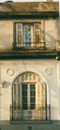
This web exhibit lets visitors view the work of architect Julio Vilamajó's landmark buildings in 1930s and 1940s Montevideo, Uruguay.
Elizabeth Watson, Art History
- Archiving the City

This project thinks through the practices through which people might come to "know," understand, have, and create the experiences that characterize living in a city. It draws upon people's everyday practices as examples of "archival practices," especially those involving digital technologies, which may provide guidance for researchers who study affective urban experiences. Through close engagement with these practices, this project will provide alternative methodologies for urban research.
Adeola Enigbokan, Environmental Psychology
- Art Games
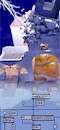
Using a combination of real-time audio processing and 3D modeling software, music student Zachary Seldess will create virtual 3D sound environments that, via a local area network (LAN), can be experienced and altered in real-time simultaneously by several users.
Zachary Seldess, Music
- Art History Teaching Resources (AHTR)

Art History Teaching Resources (AHTR) is a streamlined, peer-populated teaching resources site sharing Art History Survey teaching materials between teachers. Currently, there is no standard set of resources for art survey teachers at CUNY. Most new teachers "reinvent the wheel" by creating their own lectures, PPTs and other teaching materials. AHTR streamlines this process, connects with other similar endeavors, and forms a community of peers.
Michelle Fisher, Art History
- Artistic Exchange
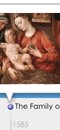
Artistic Exchange: A Timeline of 16th Century Flanders, Spain, and Latin America will be a dynamic timeline exploring 16th century art historical connections between Flanders, Spain, and Colonial Latin America. This project will utilize MIT's open source tool, SIMILE Timeline, to provide a broad visual picture of the historical period.
Kimberley Alvarado, Art History
- The Asian American Experience in Environmental Justice

The goal of this project is twofold: to share the stories of Asian American organizers with the general public and to attempt to explain and theorize reasons Asian American narratives of resistance are not commonly shared outside of Asian American community oriented spaces. This work will serve both as an oral history archive as well as a critical analysis of the environmental justice movement.
Lisa Ng, Liberal Studies
- Audience Music
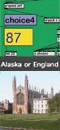
Using the Max/MSP/Jitter programming environment, Music Composition student Nathan Bowen hopes to change the concert audience experience by allowing audience members to help determine the outcome of the performance. Dividing the audience into two teams, each team will be assigned the task to get their video game character to cross the finish line first and prevent the other team from gaining ground.
Nathan Bowen, Music
- Auditory Simulations
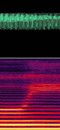
Auditory Simulations is a project to create simulations of speech sound using different digital signal processing techniques. It is primarily focused on generating simulations of degraded speech signals, and in simulating the effects of digital signal processing in a hearing aid, with emphasis on compression characteristics.
Reethee Madona Antony, Speech-Language-Hearing Sciences
- Black Sea Fish and Mollusca
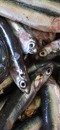
This project is a display and visualization of a budding comparative collection of Black Sea fish osteology and mollusks. As one component of a larger website about archaeological research in Sinop, Turkey, it will serve as a bilingual (English and Turkish) multimedia home for this collection from the Black Sea coastal regions of Bulgaria, Turkey, Romania, Ukraine, Russia and Georgia and be available to other zooarchaeologists for their reference.
Antonia M. Santangelo, Anthropology
- Bodies on the Line
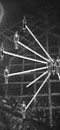
This website aims to create greater transparency around the politics of health and safety regulations within the American adult film industry. The ultimate goal is to serve as an informational resource, database, and platform for discussion amongst and between various publics – including industry performers, social scientists, and medical and legal scholars.
Christopher Baum, Anthropology
- Broadway Song Machine

As the most distinctive US form of theatre, Broadway musical theatre is consumed by audiences of all brow levels from all over the world. To address the considerable gap between public and scholarly perceptions of Broadway musical theatre, this project visualizes the construction and change of cultural taste through the production, consumption, and branding of Broadway musicals.
Sissi Liu, Theatre
- Children Framing Childhoods

Children Framing Childhoods is a longitudinal visual research project that documents how children from diverse cultural backgrounds growing up in an urban context use photography and video to represent themselves, and their complex identities from childhood to teenagehood. The on-line audio-visual archive has special relevance for urban educators and aims to cultivate a new set of lenses through which to visualize urban youth.
Wendy Luttrell, Urban Education
- City of Print
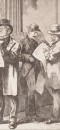
This is a collaborative project in support of the NEH-funded summer institute "City of Print." This project examines archival material dealing with the history of the printing press in New York City using digital tools and culminates in a two-week institute in New York. Using mapping, annotation tools, and face-to-face seminars, it explores both the influence of place on publications and the influence of these publications on place.
Paul Fess, English
- Community building on Gab
This project looks at the formations of community within the social media platform, Gab. I am interested in understanding the topics, conversations, and discourses that occur within this platform and how it may contribute to the ways users build communities and maintain them. In addition, I am curious about the relationship between these online spaces and how they are impacted and/or materialize in real life (IRL).
Di Yoong, Critical Social Personality Psychology
- Complex Networks
Employing methods from Statistical Physics and using computer simulation, Physics student Huafeng Xie studies complex networks drawn from a wide range of systems such as the World Wide Web, protein interactions, and citations of scientific articles, trying to understand the structure, dynamics, and revolutionary history of these systems.
Huafeng Xie, Physics
- Contingency and Collaboration in The Mediated City

This project aims to alter ways students approach academic, specifically geographic, thought. The course website will merge traditional low- and high-stakes assignments with emergent forms of digital communication to blur classroom boundaries, generate collaborative learning and encourage metacognitive attention to the production and mediation of disciplinary knowledge.
Stephen Boatright, Earth and Environmental Sciences
- Counter-Mapping Return
Counter-Mapping Return is a participatory mapping project that studies the ways in which maps, plans and planning tools can be used to articulate the aggregate of social and physical considerations that are built-in to negotiations of space. An expropriated Palestinian village named Miska, served as a case study for the mapping exercises.
Einat Manoff, Environmental Psychology
- Critical Machine Learning
Critical Machine Learning (CML) is an online resource and workshop series that targets researchers and educators of various backgrounds and attempts to bridge technical understanding and critical discussion surrounding machine learning. CML’s goal is to become a resource that encourages interdisciplinary thinking, and that researchers and educators can apply in their respective discipline.
Achim Koh, Masters of Arts in Liberal Studies
- Cultivating a women and femme-centered intergenerational oral history project

This dissertation project takes a decolonial feminist approach to history by exploring experiences of intergenerational storytelling among Indo-Caribbean women and femme-identified people. Building on the work of intersectional feminist psychologists who argue for the importance of women’s stories to our understanding of inequality, this dissertation problematizes conceptions of whose memories are seen as valuable to our historical knowledge and worthy of being remembered.
Arita Balaram, Critical Social Personality Psychology
- CUNY Fights the Fizz Counter-Advertising Contest

The Healthy CUNY Initiative, an effort by students, faculty and staff to make CUNY the healthiest urban campus in the US, is holding the CUNY Fights the Fizz Counter-Advertising Contest, which is inviting students to design campaigns to educate the CUNY community about the harmful health effects of soda and help end Big Soda’s targeting of young soda drinkers.
Amy Kwan, Public Health
- Data Visualization: Brain and Sounds
Language and brain are always intriguing! The overall purpose of this study is to compare how language is represented in the brain and to understand the interaction of noise with linguistic background. The objective of this project is to explore the available software that will facilitate data visualization of brain responses, analyze the collected data using some of these software, perform measurements, and synthesize the findings.
Reethee Madona Antony, Speech-Language-Hearing Sciences
- The Digital Afterlives of Government Documents
“The Digital Afterlives of Government Documents” looks at what digital archive metadata can potentially contribute to the visibility of human rights violations in the U.S. "War on Terror." It focuses on exploring potential uses of the API tool of the ACLU’s Torture Database, as well as visualizing key indexing and organizing processes involved in creating nongovernmental online archives of the George W. Bush administration “torture memos."
Rachel Daniell, Anthropology
- Digital Anthologist
The Digital Anthologist is a tool in development that facilitates storage, editing, and classification of materials on the web. In the spirit of "folksonomy," this digital anthologizing tool will function as another way for web users to curate online, in ways that tag back to print conventions like the Table of Contents but also utilize web conventions such as linking and tagging.
Chris Leary, English
- Digital Humanities Course Design
Project Goals: Fine tune web architecture and underlying pedagogy for undergraduate wiki-based, inquiry-driven digital humanities course that blends online collaborative commenting on texts with live weekly seminar discussions. Engage students in multicultural history of classical world(s) by turning every document into a conversation. Create enriched learning experience where the syllabus becomes just the starting point on an open-ended collaborative journey.
Andrew Lynch, Classics
- Digital Pedagogical Tool for Teaching Research Methods
This project aims to develop a computer application currently named "Manuscript Builder" to be used for teaching students how to design sound research outlines. Ultimately, the project’s mission is to promote knowledge of sound research methodology in psychology and the social sciences. It may be used as an instructional resource across a variety of courses, including but not limited to courses in research methods in the social sciences.
Teresa Ober, Educational Psychology
- Digital Sense-Making: How SEEK Students Narrate their Transition

This project analyzes how participants write in the blog setting as compared to a more private MS Word setting. For this project Kreniske is building a blog that will serve as the hub for his participants’ posts. He will then compare these posts to writings created by an equivalent sample of participants writing created in MS Word.
Philip Kreniske, Developmental Psychology
- The Distance Machine
This project centers on an open-source tool I developed for visualizing language change in relation to a particular text. I am using this tool in an investigation of the ways early American lexicographers and writers responded to the divergence of the American and British dialects of English—a contentious issue in the nineteenth century that led to heated debates about national identity, education, and class.
Jeffrey Binder, English
- Documenting Cappadocia

The region of Cappadocia in central Turkey has dozens of Byzantine structures carved into the landscape. Many of these are cave churches that are decorated with medieval wall paintings inside. This project is a multimedia site designed to provide a scholarly introduction to the area with essays and bibliography as well as an archive of maps, plans, and photographs.
Alice Lynn McMichael, Art History
- Dolphin Bioacoustics

This project is about the effects of anthropogenic noise on dolphin behavior and physiology. Examining the dynamics of the soundscape requires transforming sounds for analysis and presentation of results. Various characteristics of the sounds can be highlighted depending on the type of visual or acoustic transformation.
Heather Spence, Psychology
- Electro-Mechanical Modeling of the Human Middle Ear

The sound you hear travels through the outer and middle ear toward the inner ear and is affected by characteristics of the middle ear. Modeling techniques will be utilized to investigate the impact of the middle ear on sound transmission. Modeling will be done by developing programs in MATLAB and outcomes are potentially useful in clinics.
Maryam Naghibolhosseini, Speech-Language-Hearing Sciences
- Establishing Position

Establishing Position is a web-based platform that explores the experiences of sexual-minority athletes within the context of mainstream and gay-identified sport.
Stephanie M. Anderson, Critical Social Personality Psychology
- eTLP: Digitizing Wittgenstein’s Tractatus Logico-Philosophicus
By digitizing Ludwig Wittgenstein’s (1889-1951) Tractatus Logico-Philosophicus, I aim to make manifest its complex internal structure. I am creating a dynamic, interactive, digital incarnation of the work, and a valuable tool for its study. Employing digital technology in the humanities, eTLP shall be a twenty-first-century expression of one of the previous century’s most important philosophical texts.
Kyle Fergeson, Philosophy
- Eve of Dispersal: Mapping UAW Local 174 c.1940

Using ArcGIS, Steve is creating a map of union members residences in Local 174, an influential Detroit local within the United Auto Workers. The map will enable visualization and analysis of residence patterns in this union in the era just prior to postwar suburbanization and the dispersal of industrial plants and union membership.
Stephen McFarland, Earth and Environmental Sciences
- Extreme Makeover

Extreme Makeover: Producing Extreme Homes Reproducing Ideal Citizens examines the reality television program Extreme Makeover: Home Edition (EMHE). Using audio recordings from interviews while on the set of the show, I will produce an audio documentary that discusses how EMHE, along with their corporate sponsors, attempts to reinvent a particular kind of person — a middle class, do-it-yourself, patriotic citizen.
Bree Kessler, Environmental Psychology
- Florida’s Great Python Hunt

This 20-30 minute documentary short presents a political economy of Everglades restoration. Florida's "Python Challenge," is a new "market-based solution" for Everglades restoration that offers cash rewards to hunters for eliminating invasive Burmese pythons. Through interviews with policy makers, anthropologists and 'gladesmen,' the film utilizes the python challenge to revealing the forces that continue to radically transform the Everglade ecosystem.
David Borenstein, Anthropology
- Food Systems, Health and Community
FoodSystems, Health and Community is an educational website that provides information about connections between food and health, policy that affects the way we eat, and issues of social justice. These topics will be the broad themes that inspire regular blog posts in which I will bring together food studies and public health with my ongoing experiences as a researcher, writer, teacher, citizen, cook and eater.
Stephanie St. Pierre, Public Health
- Gendering Islands
Gendering Islands brings together a variety of documents concerning the seventeenth-century francophone Caribbean from archives and libraries in France, Guadeloupe, Martinique, and the United States. This project is designed to create a multimedia research and teaching tool for exploring the colonial Antilles.
Ashley Williard, French
- Geographies of Performance in New York City

This project focuses on the influence of the 1970s fiscal crisis on the places of performance, the perception of neighborhoods as theatre districts, and the phenomenon of government intervention in both of these elements. Digital mapping visualizes the changes in the geo-cultural landscape, especially the movement of "downtown theatre" from the West to the East Village, and the accompanying alterations to the built environment and neighborhood demographics.
Hillary Miller, Theatre
- A Geography of Impertinence
A Geography of Impertinence is a web-based tool for studying the Spanish experience of piracy and contraband in the Early Modern period. The website will allow users to interactively discover key points in the geography of piracy, using a set of Portuguese maps from the 1630s. The tool is also designed to serve as a gateway into—and as an annotation platform for—a variety of literary, historical and historiographic documents.
Clayton McCarl, Hispanic and Luso-Brazilian Literatures and Languages
- Good Game: Seduction Communities and Working at Manhood
This project uses digital data collection and analysis of diverse digital and interactive texts that teach men to embody masculine personalities through seduction skills training. It seeks to understand emergent forms of power and inequality that develop around norms and practices of ability, sexuality, and gender identity in overcoming inhibitions in heterosexual masculinity.
Anders Axel Wallace, Anthropology
- A Grammar of Where?
A Grammar of Where? will provide a geographically referenced database, maps, and links to the works of three poets writing about, and working in, the Americas. It will draw upon a broader dissertation research project that explores how nation, home, and community are imagined and named in the works of Anglophone poets writing (and publishing) between 1945 and 2005.
Tonya Foster, English
- Humanities Heart

This project will begin by recruiting creative individuals at CUNY community colleges. Students from the English, Digital Art and Design, and Music and Art departments will be encouraged to submit works that express his/her view on social justice. Through these submissions we hope to cultivate new ways of identifying the issues that continue to plague our urban communities.
Jeffrey C. Suttles, Masters of Arts in Liberal Studies
- Ignite Science Communication Sparkles in NYC
This project aims to build a website to promote science literacy to the public by providing educational resources to sharpen the speaking and writing skills of scientists, and enhancing the accessibility of professional guidance to students interested in communications. One mission is to provide jargon-free scientific concepts and make them digestible for the public. Yue will also create a video to explain her research on epilepsy.
Yue Liu, Biology
- Interface study of Zeroboard’s administrator panel
This project is an interface study of Zeroboard, an internet forum software which was widely used in South Korea as content management system; especially, this project closely examines the administrator panel as control mechanism of websites. It positions the software’s functionalities as a shaping force of cultural artifacts—websites—and user behavior within the South Korean context.
Achim Koh, Masters of Arts in Liberal Studies
- Iron in the Pre-Contact Arctic

Iron in the Pre-Contact Arctic is a digital archive of museum photos and maps showing how iron was used in the Arctic before it became a part of global trade networks. Spoiler alert: Iron is not native to the Arctic -- the sources were (literally) outer space and other continents.
Paddy Colligan, Anthropology
- Jail of Mountjoy
The Jail of Mountjoy is a linguistic-historical-aural interpretation of the rhythms hidden in Finnegans Wake accomplished by reading Roland McHugh's Annotations as music. The goal is to open up the more non-linguistic elements of the work to the common reader, as well as to pragmatically show the varying phases of the Wake an dreamer's dream through sound.
Casey Michael Henry, English
- La Chicha Dicha
This project seeks to convey the history of "chicha," a fermented corn beverage of pre-Columbian origins, in Bogotá. It includes the creation of a comic book narrative that takes the reader through one thousand years of "the culture of chicha" and an accessible website that will reach large sectors of the public in many parts of the world.
Igor Rodríguez, Anthropology
- Land Conflict

This project examines an ongoing land conflict in the small town of Caledonia, Ontario, Canada. The conflict centers on land that was granted to the Six Nations Confederacy in 1784. Today, the Canadian government and the Six Nations Confederacy both make vastly different claims regarding the ownership of this land. Using GIS mapping techniques, Flash software, and database methodology, this project provides an online, interactive exploration of this conflict. <p>
Shana Siegel, Sociology
- Language and Gender in the Online Feminist Movement

This project examines language and gender in online feminist discourse. The study analyzes the linguistic features of a corpus of tweets from the #yesallwomen Twitter movement to determine how this new communicative medium fits into current scholarship on gender and computer-mediated communication.
Nora Goldman, Linguistics
- Language on the NYC Subway

NYC is the most linguistically diverse place in the world and has the largest public transit system in North America. By mapping the languages spoken at the stations and along the routes, this project visually illustrates what linguistic neighborhoods the subway takes its riders to, from and through.
Michelle Johnson, Linguistics
- The Linguist's Kitchen
The Linguist’s Kitchen is a web-based application designed to aid beginning linguistics students in learning core linguistic principles and practices through guided analyses of languages spoken in the home and community. It’s called a kitchen because it provides a space, tools, and recipes necessary for users to “cook” raw language data so it can be used for learning through conducting linguistic analyses.
Ian Phillips, Linguistics
- LocateFlow

LocateFlow: Discovering the Nature of Creativity is dedicated to investigating the nature of creativity. Utilizing innovative design and technology, the project includes articles and interviews about creativity, large-scale social media analysis to gather perspective on web users' definitions of creativity, and a toolkit to inspire creativity.
Eathan Janney, Biology
- Lost Museum
In The Lost Museum, intrepid visitors can explore a virtual reconstruction of legendary showman P. T. Barnum's American Museum and investigate the mystery of who burned down this NYC landmark in 1865. Educators, students, and history enthusiasts can explore a rich archive of historical documents and present-day scholarship that reveals the marvels and scandals surrounding Barnum and his museum, as well as the social, political, and cultural history of the mid-nineteenth century city.
Projects
- Mapping Environmental Justice
Mapping Environmental Justice is a project to map sites of toxic dumping, environmental disasters, and struggles for environmental justice in the United States of America. Students enrolled in the spring 2017 Brooklyn College course, American Environmental History, are the primary researchers and contributors to the site.
Erik Wallenberg, History
- Mapping Miss McEnders’ Journey
In Kate Chopin’s 1892 short story, “Miss McEnders,” a naive young woman travels from her affluent home in North St. Louis to visit a dressmaker on working-class Arsenal Street. The journey highlights existing class and ethnic divides in 19th century St. Louis and prefigures civic and structural changes in St. Louis throughout the 20th century that reinforced these divisions.
Kate O’Donoghue, English
- Mapping Mythology

Mapping Mythology is a digital archive of artwork that intersects with Classical mythology. Due to the well-recognized reception of the Classical world in modernity, this project seeks to map classically-themed artwork onto the contemporary urban environment. This project will not only reveal hidden gems in city architecture and sculpture, but also seeks to connect the monuments to their given context in the larger history of Classical reception.
Jared Simard, Classics
- Mapping New York City's Sailortown
This project seeks to document the cultural palimpsest of the Port of New York, specifically Lower Manhattan’s port district circa 1890s-1940s. To do so, I will present digitized archival material to “map” New York City’s “sailortown,” a term used to describe urban waterfront districts that catered to the transient population of seafarers constantly coming and going in between voyages at sea.
Johnathan Thayer, History
- Mapping the Concept of Culture in the British Empire, 1860–1960
Between the 1860s and the 1960s in Britain, Matthew Arnold’s concept of culture functioned as a belief in an elevated, universal vantage point that would transcend, or at least paper over, political divisions between religions, between classes, between men and women, and between metropole and colony. At the New Media Lab, I will be using topic modeling to map this discourse of culture geographically and temporally.
Jarrett Moran, History
- Marilyn Gittell Digital Archive
Using OMEKA software, Kimberly is constructing a website about Marilyn Gittell’s contributions to the public school reform and community control movements of the 1960s, focusing on her scholarship about the people and politics of educational justice in New York City. This archive will be a resource for the history of educational struggles in NYC.
Kimberly Belmonte, Critical Social Personality Psychology
- Mashing through the Conventions: Convergence of Popular and Classical Music
This project explores production and reception of configurable music, facilitated by audio and video recordings. It examines the aesthetic, communicative, and social implications of Western classical and popular genre synthesis. Data gathered from media sites such as Spotify, Youtube, and ITunes, will demonstrate how the symbiosis of popular and classical creates new audience circles and changes social dynamics of reception in both fields.
Alina Kiryayeva, Music
- The Material Culture of Temperature: A Semiotics of Measurement

This project investigates the material culture of temperature, applying theory and methodology from the discipline archaeology. Temperatures are culturally produced artifacts that reveal much about the quantified epistemology from which they are derived, including the economic and political structures of the populations that utilize them. I use Charles Peirce's semiotics framework to analyze how such artifacts are used to (re)distribute meaning.
Scott W. Schwartz, Anthropology
- Medea’s Map of Colchis

Medea’s Map of Colchis is a digital archive of speech recordings of Lazuri spoken in Turkey. This interactive teaching tool will map linguistic variation found in the Lazi villages of Rize and Artvin, two provinces formerly belonging to the ancient Kingdom of Colchis. Lazuri is in danger of becoming extinct within the next two generations if children and adolescents no longer learn this language as their mother tongue.
Peri Ozlem Yuksel-Sokmen, Developmental Psychology
- Media2Politic

The Media2Politic Project is a sociocultural experiment which will attempt to make correlations between images and values in contemporary society. This project asks the question, given a cachet of images and a cachet of value-laden words, will demographic patterns emerge if respondents are asked to connect the images with the words that most describe them?
Stephanie Jeanjean, Art History
- Memoscopio

Memoscopio is a participatory action research project that documents, studies, and promotes nonviolence. me-mos-co-pio me mos ko'pjosust. [from memory + kaleidoscope] 1. Collective act of memory and creation. 2. Digital archive of materials about nonviolence, peace, and social justice. <br>3. Kaleidoscope of images, text, video, and audio.
Carolina Muñoz Proto, Social Personality Psychology
- Metamorphosis Theater: An Oral History Project on the Performance Work of Assotto Saint
I am creating an oral history-focused website around the performance work of the late artist Assotto Saint, a black gay man born and raised in Haiti who died of AIDS in NYC in 1994. Saint was a major figure in 80s and 90s black gay cultural production, serving as an editor, playwright, poet, essayist, activist, playwright, and performance artist.
Jaime Shearn Coan, English
- Modeling the Paleodistribution of Baboons and Vervets
Early modern human demography and biogeography are related to a wide range of important issues in modern human origins research, including the earliest expressions of symbolic culture. This study utilizes recently-developed species distribution modeling techniques to map the paleodistribution of baboons and vervets as an ecological model for the size and distribution of the earliest modern human populations across sub-Saharan Africa.
Natalie O'Shea, Anthropology
- Mousepads and Memoirs
Combining oral history and new media, this website is part of Beth Counihan's English dissertation (completed 2005) that investigates literacy development among participants in a lower Manhattan senior center. Via online exhibits, two participants in a memoir writing workshop at Peter Cooper Village and Stuyvesant Town learned to use the Internet and shared their experiences of life in New York from 1939 to the present
Beth Counihan, English
- Multiuser Virtual Environment
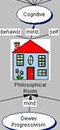
Hope Hartman, City College and Graduate Center professor of Instructional Psychology, is creating a MultiUser Virtual Environment (MUVE) on theories of educational psychology. This "metaenvironment" will consist of 3-D rooms with interactivity and animations to illustrate theories and help learners experience them as a way of learning about them.
Hope J. Hartman, Educational Psychology
- Musical World Map
The Musical World Map is an interactive web-based application in development that enables users to navigate the world map while listening to the music of the country or city associated with a particular location. This teaching tool will also explore audio boundaries as opposed to actual national borders and provide contextual documents and images to supplement the music application.
Ozan Aksoy, Music
- NYC Social Services Organizations

Many social service programs for dispossessed populations are underutilized because potential clients are unaware of numerous available resources. This project aims to provide a comprehensive listing of city organizations, including adult and youth homeless organizations, free health clinics, detoxification and substance abuse treatment programs, soup kitchens, and mental health services.
Marcos Tejeda, Sociology
- Ordinary Language Poetry: A Talking Book
Using digital recording technology to generate a group of poems as an audio-book, this project will attend to, insist upon and preserve the profundity of the everyday utterance. It aims to fabricate a world that parallels the ordinary space of everyday activity and its language events, reassembling that space as a new architectural sound-object.
Miriam Atkin, English
- Organizing Ourselves
The goal of this dissertation research is to document and analyze the organizational structures and decision-making processes of a diverse sample of children’s membership groups from around the world. My aim is to identify different types and qualities of children’s membership groups and look at how each affords different opportunities for children to develop and exercise their citizenship and capacities for self-governance in groups.
Bijan Kimiagar, Environmental Psychology
- Our Mobility

Our Mobility is a research project to learn more about transportation disadvantage in New York City: how disability, income, race, gender, or age limit the ability to participate in activities of daily life. Disability as a category for transportation disadvantage has been relatively underexplored in empirical studies. To fill this gap, the project focuses on people whose disabilities make it difficult to use public transportation independently.
Jessica Murray, Developmental Psychology
- P.A.R.T. College Bridge Program
Four high school students from Benjamin Banneker Academy for Community Development in Brooklyn are partnering with graduate students on this research project to utilize digital video production as a research methodology. It examines attitudes regarding recent renovations to the Brooklyn Children's Museum and will engage young people in understanding how their peers understand and interact in a museum environment.
Askia Egashira, Psychology
- Parents Frame Childhood for the World to See

Developmental studies are ever more challenged to understand the familial use of mass media products and the impact home ecology has on the function and values of the family. This project will examine parents’ and children’s experiences and meanings relevant to their Internet posting of child images. The study will answer how do parents use their child's photographs as cultural tools on their personal social media accounts.
Ayşenur Benevento, Psychology
- Participatory Patienthood and Personal Health Blogs
Web 2.0 applications and patient participation in creating medical knowledge are facilitating significant changes in the political culture of health care. While industry and media laud this trend, some academics argue that patients take on too great a burden. The voice of the average patient is underrepresented in this debate. This project seeks to fill that gap through a study on blogs written by women with Multiple Sclerosis as sites of connection to others and engagement with the medical establishment.
Collette Sosnowy, Environmental Psychology
- Performance and Spirituality
This online resource broadens our understanding of religious theatre and performance by studying groups that are generally labeled as "religious cults." The study of "New Religious Movements" (NRM) reveals the diversity of religious performances, offering resources useful to scholars in a range of disciplines.
Edmund B. Lingan, Theatre
- Photographic Representation of Children of War

This project is an analysis of 300 images of war-affected youths in Iraq and Afghanistan from the websites of four international humanitarian organizations. Interviews will be conducted with key informants from these organizations about the production of the images on their websites.
Aida Izadpanah, Environmental Psychology
- Photography and Place
Part of a larger Web-based project on nineteenth-century photography and history in Brazil, this project focuses on the work of the Brazilian photographer Marc Ferrez and, more specifically, on his photographs of Rio de Janeiro between 1860 and 1910.
Fernando Azevedo, Art History
- Phylo
Phylo explores the origins of contemporary philosophy by looking at historical relationships between individuals, institutions, and ideas. These relationships are contained in a user-maintained database and rendered using data visualization tools. In fall 2009, Phylo launched a user-annotated catalog of job openings in academic philosophy that enables job seekers to share and gain information about the market.
Chris Alan Sula, Philosophy
- The Poetic Mode

The poem film as a cinematic form emerged in the early 20th century. Several film movements have developed new editing techniques and styles and offered new possibilities for avant-garde filmmaking. This video channel hosts an original series to explore the interaction between the visual, aural, and textual components of poem film. Each poem film links […]
Tian Leng, Liberal Studies
- Political Movements
This research and CD-ROM project examines the production and performance of "embodied knowledges"—delineating how dance educators provoke critical consciousness through African-derived dance. The data collected for Political Movements, including digital video footage and photographs of dance performances, were an integral part of this dissertation.
Rosemarie A. Roberts, Social Personality Psychology
- Pothole Citizenship: Mapping from the Ground Up in Jackson, Mississippi

Pothole Citizenship: Mapping from the Ground Up in Jackson, Mississippi is a public mapping project designed to collect and share stories of community members and the potholes they navigate in order to better understand the stratified social consequences of failing roads. Through this site, residents can describe road conditions, how these impact their lives, and explore how others encounter their streets.
Merrit Corrigan, Anthropology
- Production of Nature in Car Ads

Myths of Nature Portrayed in Post WWII National Geographic Car Ads is a study that utilizes a timeline and archive to visually analyze, thematically group, and present the changing portrayals and narratives of of nature found in National Geographic car advertisements.
Shawndel N. Fraser, Environmental Psychology
- Provincial Reports on Early Twentieth Century Brazil
This project aims to collect, OCR and organize Bahian governors' reports from 1892 to 1930, and to convert them to a workable format for research use and statistical analysis. In a second stage, I plan to make data from those sources available online. I also plan to start analyzing some of the credit/debit/investment data and present them in a graphical format.
Rafael Davis Portela, History
- Reading with Emotion in the Eighteenth Century
This project analyzes the way the "passions and humours" are represented through marginal annotations in an eighteenth-century elocution manual. By bringing these eighteenth-century annotations together with contemporary computational methods of analyzing the emotional content of texts, it will provide a historical perspective of the way emotional performance was understood in the eighteenth century.
Jeffrey Binder, English
- Reimagining what it means to be Black in US: Family cultural socialization practices that shape racial identities among diverse young adults
Contemporary immigration has resulted in shifts in traditional racial and ethnic categories within the United States. Including migratory contributions in the research and literature on black identity development can shed light on the salience of race across ethnicities and contexts. This study employs social practice theory to understand racial identity development among black, Latino/Hispanic and/or Afro-Latino young adults.
Tia Fletcher, Developmental Psychology
- Remediating Reconstruction: Picturing Productive Property
"Remediating Reconstruction" is an Omeka database of images from the 1876 Philadelphia Centennial that aims to explore Americans' relationship to material things at the end of Reconstruction and at the start of the Gilded Age. It includes engravings from Frank Leslie's Illustrated Register of the Centennial Exhibition as well as stereographs that present views of the Centennial fairgrounds, buildings, and displays.
Dominique Zino, English
- Renegade Poetic America
Renegade Poetic America will provide a comprehensive database, resource center, and digital exhibition for the letters of two American poets, Edward Dorn and Amiri Baraka. With integrated annotations, links to sound, image, and word, and dynamic timelines, this website will offer an in-depth look at complicated American lives, cultures, and histories.
Claudia Pisano, English
- Resistances/Existences

Sociology student Laura Fantone (completed 2005) produced this documentary on women and resistance in Tuscany, from World War Two to the present. Four self-described "regular women" connect their everyday lives to recent Italian history, from the resistance to fascism, to the feminist movement, to freedom of speech and contemporary global wars.
Laura Fantone, Sociology and Women’s Studies
- Risky Images of Climate Futures
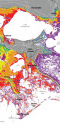
"Risky images" of southern Louisiana include maps and digital renderings of disappeared coastlines, subsiding lands, and underwater Main Streets – topographies that do not yet exist but that nevertheless demand action in the present. This project asks after the data and ideas that go into mapping these landscapes and the parameters that they set on possible futures.
Sheehan Moore, Anthropology
- Roots

Roots was produced by Art History student Leeann Pomplas-Bruening at the New Media Lab for a major NYC financial institution. The 3D visualization of the stock market was used as part of a multimedia installation at the institution's training headquarters.
Lee Ann Pomplas-Breuning, Art History
- Scientific Video Catalog Projects

Scientists in all disciplines have created thousands of still images and animations on computers. There also are thousands of uncompiled scientific photographs, films, audio files, and software applications. John Jay College Mathematics instructor Gary Welz aims to create an online digital library for the storage and distribution of rich media for scientific professionals.
Gary Welz, Mathematics
- Sentiment Analysis in Comparative Literature
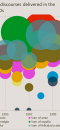
Literary memory in its emotional aspect. This project advances a historiography of emotions in literature that begins by understanding culture as a “set of overlearned cognitive habits” (Reddy, The Navigation of Feeling 34). This new form of reading can expand the possibilities of comprehension and evaluation in comparative literature and transatlantic studies.
Laura V. Sández, Hispanic and Luso-Brazilian Literatures and Languages
- The Simplicity Archive

The Simplicity Archive was created as a space to connect with people who engage in simple living and to spread awareness of Laurie’s research project on simple living. The site is also home to a blog written by Laurie about simple living.
Laurie Hurson, Environmental Psychology
- Smartphone Travel Survey app

This project is about trends in smartphone usage and transportation. Increasingly people are relying on public data and smartphone applications to plan journeys and wayfind. Smartphone Travel Survey app is a survey tool to collect participant data from the smartphone on map usage and transportation choices.
Adam Davidson, Earth and Environmental Sciences
- Software Tools for Otoacoustic Emission Measurement
Otoacoustic emission measurements (OAEs) are sounds that come from the ear. When cochlear outer hair cells are damaged or destroyed from noise overexposure, changes may be reflected in OAEs. Joshua will focus on developing software tools to answer research questions related to the use of OAEs for hearing conservation.
Joshua Hajicek, Speech-Language-Hearing Sciences
- Spoken Word Theaters

Working across disciplines with a "Neo-Baroque" conception of inter-arts unity, Music Composition student Peter Kirn develops techniques for integrating physical computing, digital multimedia, and interactive performance. Building on music as the formal ordering of events in time, he creates a toolkit of approaches to media and performance.
Peter Kirn, Music
- Street Med Apps

The Street Med Apps project will aggregate and streamline the disparate online resources for activist first aid. This interactive multimedia knowledge base will also provide strategic tools for street and affinity group medics such as on demand decision support, private communication, and geolocation capabilities. It will identify new types of mobile technologies that support the medical needs of individuals working in low-resource environments that can be used to improve the quality, efficiency and effectiveness of providers.
Suzanne Tamang, Computer Science
- Teaching Bilinguals (Even If You're Not One!): A Video Webseries for K-12 Educators
This video webseries will aid K-12 teachers and teacher candidates in unpacking an approach to educating emergent bilingual students which recognizes, draws on, and expands their diverse and dynamic linguistic practices called translanguaging pedagogy. Special attention will be paid to scenarios where the teacher is herself, unfamiliar with the languages of her students.
Sara Vogel, Urban Education
- Theresa Bernstein: A Century in Art
This project is part of a larger effort to curate a retrospective exhibition of works by Theresa Bernstein (1890-2002). This remarkable and prolific artist has, in general, been overlooked by scholars, thus the accompanying website — a compendium of images, videos, archival material, and other sources — will provide a starting point for future scholarship.
Elsie Heung, Art History
- Traffic
Physics student Lei Zhou uses cellular automata techniques and 3D animations and simulations to depict and comprehend gridlock and to find possible strategies to ameliorate this urban traffic problem.
Lei Zhou, Physics
- Urban Assignment
Urban Assignment revolves around the ways in which urban analytic tools and available technologies are capable of integrating and communicating abrupt changes in urban condition. This project explores the ways in which these technologies can be used in a 'bottom-up' manner (information to be fed by community networks and individuals) rather than strictly through 'top down' mechanisms of various authorities.
Einat Manoff, Environmental Psychology
- Urban Food Environments
This project begins with community supported agriculture (CSA) and goes on to focus on the many alternative food networks (AFNs) urban residents create and seek out to meet their dietary needs and culinary interests. It provides a resource for people interested in the many facets of urban food from aesthetic experiences to social and environmental justice issues. It includes material on the scholarly and policy implications of urban food systems.
Christine Caruso, Environmental Psychology
- Venereal Disease Visual History Archive
The Venereal Disease Visual History Archive will present and make available visual culture materials related to syphilis and gonorrhea from the first half of the twentieth century that are currently scattered among different digital and traditional archives. The primary focus is on sources related to the campaign to “stamp out” venereal disease in the 1930s and 1940s.
Erin Wuebker, History
- Virtual NY
The history of New York City from Dutch settlement to the present is the focus of this website that combines informative exhibits, incisive primary documents, interactive graphics, and educational curricula to uncover the many and varied layers of the city's past. Working with the collection of the Seymour B. Durst Old York Library and Reading Room, two GC History students produce this website, which has become a favorite on-line source for NYC history.
Projects
- Virtual Poetry Project

The Virtual Poetry Project is an online journal that showcases the ways contemporary poetry overcomes the limitations of the written text. Connecting artists and scholars around the world through web 2.0 technologies, this project will build a web of resources and a network of people interested in these new forms of experimental poetry.
Marcos Wasem, Hispanic and Luso-Brazilian Literatures and Languages
- Visualizing Craft Knowledge
This project analyzes an online bulletin board from a community of glass makers by mapping the taxonomies of a threaded bulletin board discussion of about 4000 entries on techniques of glass making. The end goal is a data visualization of the breadth of knowledge generated by the activities of over a decade's correspondence of an ad hoc community of craft enthusiasts, spanning professional to leisure makers.
Mei-Ling Israel, Consortial
- Visual remix of a dance archive
The project aims to visually remix the corpus of the expressionists dancers Alexander Sacharoff and Clotilde von Derp, held at the Dance Collections, NY Public Library. The manipulation procedure is similar to the transformation of a photograph into a matrix for stencil. In conjunction with the academic research for the MA thesis using written sources, I will work on a visual cartography that will feed into the writing and vice versa.
Pablo Muñoz, Liberal Studies
- Vortex
High-temperature superconducting materials allow for resistanceless flow of electricity below a certain temperature and have many practical applications in power generation and transmission, medical devices, communications, and computers. Incorporated into Yuri Artemov's Physics dissertation (completed 2005), 3D animations and visualizations of the tornado-like swirl of electrons illuminate the nature of superconductors and ways to improve their construction.
Yuri Artemov, Physics
- The Walden Soundscape

The Walden Soundscape project is my effort to share the sounds at Walden Pond in Concord, MA with any interested reader of Henry David Thoreau's Walden in the form of an immersive website experience. I'm recording sounds at the pond in all four seasons, and creating companion stop-motion animation videos of a walk around the pond in each season to bring the visual and sonic landscape of the pond to all who wish to see or hear it.
Christina Katopodis, English
- Wavelength

At certain frequencies, rhythm and pitch become one. It is possible to associate light and sound in similar ways. This project explores dialogues across the boundary between light and sound, art and music, in the spaces between performers.
Rob Collins, Mathematics
- WeLike2Draw
Welike2draw is a suite of open-source hardware and software built to facilitate creativity and collaboration on digital devices. The software allows participants to share drawings over the internet, working simultaneously in real time and integrating rich media into their works. These devices hope to honor our bodies' capability of dexterous and rhythmic movements, freeing us from the need to sit at a computer and inviting us to dance shake and wiggle with our machines
Samwell Freeman, Computer Science
- What Can Hate Crimes Tell Us About Justice?
Using digital depictions that track the development of the concept of "hate crimes" and related legislation since the civil rights era, this project analyzes historical textual and visual data related to bias crimes to express changes in the public discourse and the larger cultural framework that contribute to society’s intolerance for violent bias-crime.
Roz Myers, Criminal Justice
- What They Saved: Pieces of a Jewish Past

What They Saved: Pieces of a Jewish Past is the story of how a daughter reconstructed her family’s missing past from a handful of mysterious objects passed down from her father. The strange collection—locks of hair, a postcard from Argentina, a cemetery receipt, letters written in Yiddish—moved her to search for the people who had left these traces of their lives and, ultimately, to come to terms with the bittersweet legacy of the third generation.
Nancy K. Miller, English and Comparative Literature
- Where can I get an HIV test? There's an App for that.

This project examines whether or not young Latinas and Black women ages 18-25 who use a smartphone app for sexual and reproductive health (SRH) information can achieve increased knowledge and utilization of SRH services such as pregnancy prevention (Plan B), HIV, STI, and pregnancy testing, and to other social services, such as substance abuse treatment.
Sonia K. González, Public Health
Anthropology
- Black Sea Fish and Mollusca
This project is a display and visualization of a budding comparative collection of Black Sea fish osteology and mollusks. As one component of a larger website about archaeological research in Sinop, Turkey, it will serve as a bilingual (English and Turkish) multimedia home for this collection from the Black Sea coastal regions of Bulgaria, Turkey, Romania, Ukraine, Russia and Georgia and be available to other zooarchaeologists for their reference.
Antonia M. Santangelo, Anthropology
- Bodies on the Line
This website aims to create greater transparency around the politics of health and safety regulations within the American adult film industry. The ultimate goal is to serve as an informational resource, database, and platform for discussion amongst and between various publics – including industry performers, social scientists, and medical and legal scholars.
Christopher Baum, Anthropology
- The Digital Afterlives of Government Documents
“The Digital Afterlives of Government Documents” looks at what digital archive metadata can potentially contribute to the visibility of human rights violations in the U.S. "War on Terror." It focuses on exploring potential uses of the API tool of the ACLU’s Torture Database, as well as visualizing key indexing and organizing processes involved in creating nongovernmental online archives of the George W. Bush administration “torture memos."
Rachel Daniell, Anthropology
- Florida’s Great Python Hunt
This 20-30 minute documentary short presents a political economy of Everglades restoration. Florida's "Python Challenge," is a new "market-based solution" for Everglades restoration that offers cash rewards to hunters for eliminating invasive Burmese pythons. Through interviews with policy makers, anthropologists and 'gladesmen,' the film utilizes the python challenge to revealing the forces that continue to radically transform the Everglade ecosystem.
David Borenstein, Anthropology
- Good Game: Seduction Communities and Working at Manhood
This project uses digital data collection and analysis of diverse digital and interactive texts that teach men to embody masculine personalities through seduction skills training. It seeks to understand emergent forms of power and inequality that develop around norms and practices of ability, sexuality, and gender identity in overcoming inhibitions in heterosexual masculinity.
Anders Axel Wallace, Anthropology
- Iron in the Pre-Contact Arctic
Iron in the Pre-Contact Arctic is a digital archive of museum photos and maps showing how iron was used in the Arctic before it became a part of global trade networks. Spoiler alert: Iron is not native to the Arctic -- the sources were (literally) outer space and other continents.
Paddy Colligan, Anthropology
- La Chicha Dicha
This project seeks to convey the history of "chicha," a fermented corn beverage of pre-Columbian origins, in Bogotá. It includes the creation of a comic book narrative that takes the reader through one thousand years of "the culture of chicha" and an accessible website that will reach large sectors of the public in many parts of the world.
Igor Rodríguez, Anthropology
- The Material Culture of Temperature: A Semiotics of Measurement
This project investigates the material culture of temperature, applying theory and methodology from the discipline archaeology. Temperatures are culturally produced artifacts that reveal much about the quantified epistemology from which they are derived, including the economic and political structures of the populations that utilize them. I use Charles Peirce's semiotics framework to analyze how such artifacts are used to (re)distribute meaning.
Scott W. Schwartz, Anthropology
- Modeling the Paleodistribution of Baboons and Vervets
Early modern human demography and biogeography are related to a wide range of important issues in modern human origins research, including the earliest expressions of symbolic culture. This study utilizes recently-developed species distribution modeling techniques to map the paleodistribution of baboons and vervets as an ecological model for the size and distribution of the earliest modern human populations across sub-Saharan Africa.
Natalie O'Shea, Anthropology
- Pothole Citizenship: Mapping from the Ground Up in Jackson, Mississippi
Pothole Citizenship: Mapping from the Ground Up in Jackson, Mississippi is a public mapping project designed to collect and share stories of community members and the potholes they navigate in order to better understand the stratified social consequences of failing roads. Through this site, residents can describe road conditions, how these impact their lives, and explore how others encounter their streets.
Merrit Corrigan, Anthropology
- Risky Images of Climate Futures
"Risky images" of southern Louisiana include maps and digital renderings of disappeared coastlines, subsiding lands, and underwater Main Streets – topographies that do not yet exist but that nevertheless demand action in the present. This project asks after the data and ideas that go into mapping these landscapes and the parameters that they set on possible futures.
Sheehan Moore, Anthropology
Art History
- The Architecture of Julio Vilamajó
This web exhibit lets visitors view the work of architect Julio Vilamajó's landmark buildings in 1930s and 1940s Montevideo, Uruguay.
Elizabeth Watson, Art History
- Art History Teaching Resources (AHTR)
Art History Teaching Resources (AHTR) is a streamlined, peer-populated teaching resources site sharing Art History Survey teaching materials between teachers. Currently, there is no standard set of resources for art survey teachers at CUNY. Most new teachers "reinvent the wheel" by creating their own lectures, PPTs and other teaching materials. AHTR streamlines this process, connects with other similar endeavors, and forms a community of peers.
Michelle Fisher, Art History
- Artistic Exchange
Artistic Exchange: A Timeline of 16th Century Flanders, Spain, and Latin America will be a dynamic timeline exploring 16th century art historical connections between Flanders, Spain, and Colonial Latin America. This project will utilize MIT's open source tool, SIMILE Timeline, to provide a broad visual picture of the historical period.
Kimberley Alvarado, Art History
- Documenting Cappadocia
The region of Cappadocia in central Turkey has dozens of Byzantine structures carved into the landscape. Many of these are cave churches that are decorated with medieval wall paintings inside. This project is a multimedia site designed to provide a scholarly introduction to the area with essays and bibliography as well as an archive of maps, plans, and photographs.
Alice Lynn McMichael, Art History
- Media2Politic
The Media2Politic Project is a sociocultural experiment which will attempt to make correlations between images and values in contemporary society. This project asks the question, given a cachet of images and a cachet of value-laden words, will demographic patterns emerge if respondents are asked to connect the images with the words that most describe them?
Stephanie Jeanjean, Art History
- Photography and Place
Part of a larger Web-based project on nineteenth-century photography and history in Brazil, this project focuses on the work of the Brazilian photographer Marc Ferrez and, more specifically, on his photographs of Rio de Janeiro between 1860 and 1910.
Fernando Azevedo, Art History
- Roots
Roots was produced by Art History student Leeann Pomplas-Bruening at the New Media Lab for a major NYC financial institution. The 3D visualization of the stock market was used as part of a multimedia installation at the institution's training headquarters.
Lee Ann Pomplas-Breuning, Art History
- Theresa Bernstein: A Century in Art
This project is part of a larger effort to curate a retrospective exhibition of works by Theresa Bernstein (1890-2002). This remarkable and prolific artist has, in general, been overlooked by scholars, thus the accompanying website — a compendium of images, videos, archival material, and other sources — will provide a starting point for future scholarship.
Elsie Heung, Art History
Biology
- Ignite Science Communication Sparkles in NYC
This project aims to build a website to promote science literacy to the public by providing educational resources to sharpen the speaking and writing skills of scientists, and enhancing the accessibility of professional guidance to students interested in communications. One mission is to provide jargon-free scientific concepts and make them digestible for the public. Yue will also create a video to explain her research on epilepsy.
Yue Liu, Biology
- LocateFlow
LocateFlow: Discovering the Nature of Creativity is dedicated to investigating the nature of creativity. Utilizing innovative design and technology, the project includes articles and interviews about creativity, large-scale social media analysis to gather perspective on web users' definitions of creativity, and a toolkit to inspire creativity.
Eathan Janney, Biology
Classics
- Digital Humanities Course Design
Project Goals: Fine tune web architecture and underlying pedagogy for undergraduate wiki-based, inquiry-driven digital humanities course that blends online collaborative commenting on texts with live weekly seminar discussions. Engage students in multicultural history of classical world(s) by turning every document into a conversation. Create enriched learning experience where the syllabus becomes just the starting point on an open-ended collaborative journey.
Andrew Lynch, Classics
- Mapping Mythology
Mapping Mythology is a digital archive of artwork that intersects with Classical mythology. Due to the well-recognized reception of the Classical world in modernity, this project seeks to map classically-themed artwork onto the contemporary urban environment. This project will not only reveal hidden gems in city architecture and sculpture, but also seeks to connect the monuments to their given context in the larger history of Classical reception.
Jared Simard, Classics
Computer Science
- Street Med Apps
The Street Med Apps project will aggregate and streamline the disparate online resources for activist first aid. This interactive multimedia knowledge base will also provide strategic tools for street and affinity group medics such as on demand decision support, private communication, and geolocation capabilities. It will identify new types of mobile technologies that support the medical needs of individuals working in low-resource environments that can be used to improve the quality, efficiency and effectiveness of providers.
Suzanne Tamang, Computer Science
- WeLike2Draw
Welike2draw is a suite of open-source hardware and software built to facilitate creativity and collaboration on digital devices. The software allows participants to share drawings over the internet, working simultaneously in real time and integrating rich media into their works. These devices hope to honor our bodies' capability of dexterous and rhythmic movements, freeing us from the need to sit at a computer and inviting us to dance shake and wiggle with our machines
Samwell Freeman, Computer Science
Consortial
- Visualizing Craft Knowledge
This project analyzes an online bulletin board from a community of glass makers by mapping the taxonomies of a threaded bulletin board discussion of about 4000 entries on techniques of glass making. The end goal is a data visualization of the breadth of knowledge generated by the activities of over a decade's correspondence of an ad hoc community of craft enthusiasts, spanning professional to leisure makers.
Mei-Ling Israel, Consortial
Criminal Justice
- What Can Hate Crimes Tell Us About Justice?
Using digital depictions that track the development of the concept of "hate crimes" and related legislation since the civil rights era, this project analyzes historical textual and visual data related to bias crimes to express changes in the public discourse and the larger cultural framework that contribute to society’s intolerance for violent bias-crime.
Roz Myers, Criminal Justice
Critical Social Personality Psychology
- Community building on Gab
This project looks at the formations of community within the social media platform, Gab. I am interested in understanding the topics, conversations, and discourses that occur within this platform and how it may contribute to the ways users build communities and maintain them. In addition, I am curious about the relationship between these online spaces and how they are impacted and/or materialize in real life (IRL).
Di Yoong, Critical Social Personality Psychology
- Cultivating a women and femme-centered intergenerational oral history project
This dissertation project takes a decolonial feminist approach to history by exploring experiences of intergenerational storytelling among Indo-Caribbean women and femme-identified people. Building on the work of intersectional feminist psychologists who argue for the importance of women’s stories to our understanding of inequality, this dissertation problematizes conceptions of whose memories are seen as valuable to our historical knowledge and worthy of being remembered.
Arita Balaram, Critical Social Personality Psychology
- Establishing Position
Establishing Position is a web-based platform that explores the experiences of sexual-minority athletes within the context of mainstream and gay-identified sport.
Stephanie M. Anderson, Critical Social Personality Psychology
- Marilyn Gittell Digital Archive
Using OMEKA software, Kimberly is constructing a website about Marilyn Gittell’s contributions to the public school reform and community control movements of the 1960s, focusing on her scholarship about the people and politics of educational justice in New York City. This archive will be a resource for the history of educational struggles in NYC.
Kimberly Belmonte, Critical Social Personality Psychology
Developmental Psychology
- Digital Sense-Making: How SEEK Students Narrate their Transition
This project analyzes how participants write in the blog setting as compared to a more private MS Word setting. For this project Kreniske is building a blog that will serve as the hub for his participants’ posts. He will then compare these posts to writings created by an equivalent sample of participants writing created in MS Word.
Philip Kreniske, Developmental Psychology
- Medea’s Map of Colchis
Medea’s Map of Colchis is a digital archive of speech recordings of Lazuri spoken in Turkey. This interactive teaching tool will map linguistic variation found in the Lazi villages of Rize and Artvin, two provinces formerly belonging to the ancient Kingdom of Colchis. Lazuri is in danger of becoming extinct within the next two generations if children and adolescents no longer learn this language as their mother tongue.
Peri Ozlem Yuksel-Sokmen, Developmental Psychology
- Our Mobility
Our Mobility is a research project to learn more about transportation disadvantage in New York City: how disability, income, race, gender, or age limit the ability to participate in activities of daily life. Disability as a category for transportation disadvantage has been relatively underexplored in empirical studies. To fill this gap, the project focuses on people whose disabilities make it difficult to use public transportation independently.
Jessica Murray, Developmental Psychology
- Reimagining what it means to be Black in US: Family cultural socialization practices that shape racial identities among diverse young adults
Contemporary immigration has resulted in shifts in traditional racial and ethnic categories within the United States. Including migratory contributions in the research and literature on black identity development can shed light on the salience of race across ethnicities and contexts. This study employs social practice theory to understand racial identity development among black, Latino/Hispanic and/or Afro-Latino young adults.
Tia Fletcher, Developmental Psychology
Earth and Environmental Sciences
- Contingency and Collaboration in The Mediated City
This project aims to alter ways students approach academic, specifically geographic, thought. The course website will merge traditional low- and high-stakes assignments with emergent forms of digital communication to blur classroom boundaries, generate collaborative learning and encourage metacognitive attention to the production and mediation of disciplinary knowledge.
Stephen Boatright, Earth and Environmental Sciences
- Eve of Dispersal: Mapping UAW Local 174 c.1940
Using ArcGIS, Steve is creating a map of union members residences in Local 174, an influential Detroit local within the United Auto Workers. The map will enable visualization and analysis of residence patterns in this union in the era just prior to postwar suburbanization and the dispersal of industrial plants and union membership.
Stephen McFarland, Earth and Environmental Sciences
- Smartphone Travel Survey app
This project is about trends in smartphone usage and transportation. Increasingly people are relying on public data and smartphone applications to plan journeys and wayfind. Smartphone Travel Survey app is a survey tool to collect participant data from the smartphone on map usage and transportation choices.
Adam Davidson, Earth and Environmental Sciences
Educational Psychology
- Digital Pedagogical Tool for Teaching Research Methods
This project aims to develop a computer application currently named "Manuscript Builder" to be used for teaching students how to design sound research outlines. Ultimately, the project’s mission is to promote knowledge of sound research methodology in psychology and the social sciences. It may be used as an instructional resource across a variety of courses, including but not limited to courses in research methods in the social sciences.
Teresa Ober, Educational Psychology
- Multiuser Virtual Environment
Hope Hartman, City College and Graduate Center professor of Instructional Psychology, is creating a MultiUser Virtual Environment (MUVE) on theories of educational psychology. This "metaenvironment" will consist of 3-D rooms with interactivity and animations to illustrate theories and help learners experience them as a way of learning about them.
Hope J. Hartman, Educational Psychology
English and Comparative Literature
- What They Saved: Pieces of a Jewish Past
What They Saved: Pieces of a Jewish Past is the story of how a daughter reconstructed her family’s missing past from a handful of mysterious objects passed down from her father. The strange collection—locks of hair, a postcard from Argentina, a cemetery receipt, letters written in Yiddish—moved her to search for the people who had left these traces of their lives and, ultimately, to come to terms with the bittersweet legacy of the third generation.
Nancy K. Miller, English and Comparative Literature
English
- City of Print
This is a collaborative project in support of the NEH-funded summer institute "City of Print." This project examines archival material dealing with the history of the printing press in New York City using digital tools and culminates in a two-week institute in New York. Using mapping, annotation tools, and face-to-face seminars, it explores both the influence of place on publications and the influence of these publications on place.
Paul Fess, English
- Digital Anthologist
The Digital Anthologist is a tool in development that facilitates storage, editing, and classification of materials on the web. In the spirit of "folksonomy," this digital anthologizing tool will function as another way for web users to curate online, in ways that tag back to print conventions like the Table of Contents but also utilize web conventions such as linking and tagging.
Chris Leary, English
- The Distance Machine
This project centers on an open-source tool I developed for visualizing language change in relation to a particular text. I am using this tool in an investigation of the ways early American lexicographers and writers responded to the divergence of the American and British dialects of English—a contentious issue in the nineteenth century that led to heated debates about national identity, education, and class.
Jeffrey Binder, English
- A Grammar of Where?
A Grammar of Where? will provide a geographically referenced database, maps, and links to the works of three poets writing about, and working in, the Americas. It will draw upon a broader dissertation research project that explores how nation, home, and community are imagined and named in the works of Anglophone poets writing (and publishing) between 1945 and 2005.
Tonya Foster, English
- Jail of Mountjoy
The Jail of Mountjoy is a linguistic-historical-aural interpretation of the rhythms hidden in Finnegans Wake accomplished by reading Roland McHugh's Annotations as music. The goal is to open up the more non-linguistic elements of the work to the common reader, as well as to pragmatically show the varying phases of the Wake an dreamer's dream through sound.
Casey Michael Henry, English
- Mapping Miss McEnders’ Journey
In Kate Chopin’s 1892 short story, “Miss McEnders,” a naive young woman travels from her affluent home in North St. Louis to visit a dressmaker on working-class Arsenal Street. The journey highlights existing class and ethnic divides in 19th century St. Louis and prefigures civic and structural changes in St. Louis throughout the 20th century that reinforced these divisions.
Kate O’Donoghue, English
- Metamorphosis Theater: An Oral History Project on the Performance Work of Assotto Saint
I am creating an oral history-focused website around the performance work of the late artist Assotto Saint, a black gay man born and raised in Haiti who died of AIDS in NYC in 1994. Saint was a major figure in 80s and 90s black gay cultural production, serving as an editor, playwright, poet, essayist, activist, playwright, and performance artist.
Jaime Shearn Coan, English
- Mousepads and Memoirs
Combining oral history and new media, this website is part of Beth Counihan's English dissertation (completed 2005) that investigates literacy development among participants in a lower Manhattan senior center. Via online exhibits, two participants in a memoir writing workshop at Peter Cooper Village and Stuyvesant Town learned to use the Internet and shared their experiences of life in New York from 1939 to the present
Beth Counihan, English
- Ordinary Language Poetry: A Talking Book
Using digital recording technology to generate a group of poems as an audio-book, this project will attend to, insist upon and preserve the profundity of the everyday utterance. It aims to fabricate a world that parallels the ordinary space of everyday activity and its language events, reassembling that space as a new architectural sound-object.
Miriam Atkin, English
- Reading with Emotion in the Eighteenth Century
This project analyzes the way the "passions and humours" are represented through marginal annotations in an eighteenth-century elocution manual. By bringing these eighteenth-century annotations together with contemporary computational methods of analyzing the emotional content of texts, it will provide a historical perspective of the way emotional performance was understood in the eighteenth century.
Jeffrey Binder, English
- Remediating Reconstruction: Picturing Productive Property
"Remediating Reconstruction" is an Omeka database of images from the 1876 Philadelphia Centennial that aims to explore Americans' relationship to material things at the end of Reconstruction and at the start of the Gilded Age. It includes engravings from Frank Leslie's Illustrated Register of the Centennial Exhibition as well as stereographs that present views of the Centennial fairgrounds, buildings, and displays.
Dominique Zino, English
- Renegade Poetic America
Renegade Poetic America will provide a comprehensive database, resource center, and digital exhibition for the letters of two American poets, Edward Dorn and Amiri Baraka. With integrated annotations, links to sound, image, and word, and dynamic timelines, this website will offer an in-depth look at complicated American lives, cultures, and histories.
Claudia Pisano, English
- The Walden Soundscape
The Walden Soundscape project is my effort to share the sounds at Walden Pond in Concord, MA with any interested reader of Henry David Thoreau's Walden in the form of an immersive website experience. I'm recording sounds at the pond in all four seasons, and creating companion stop-motion animation videos of a walk around the pond in each season to bring the visual and sonic landscape of the pond to all who wish to see or hear it.
Christina Katopodis, English
Environmental Psychology
- Architecture and Wayfinding
Architecture and Wayfinding is a 3D simulation of one of the Graduate Center's floors. The project aims to reveal particular characteristics of built environments that influence the process of wayfinding, or how people find their way in certain challenging environments.
Aga Skorupka, Environmental Psychology
- Archiving the City
This project thinks through the practices through which people might come to "know," understand, have, and create the experiences that characterize living in a city. It draws upon people's everyday practices as examples of "archival practices," especially those involving digital technologies, which may provide guidance for researchers who study affective urban experiences. Through close engagement with these practices, this project will provide alternative methodologies for urban research.
Adeola Enigbokan, Environmental Psychology
- Counter-Mapping Return
Counter-Mapping Return is a participatory mapping project that studies the ways in which maps, plans and planning tools can be used to articulate the aggregate of social and physical considerations that are built-in to negotiations of space. An expropriated Palestinian village named Miska, served as a case study for the mapping exercises.
Einat Manoff, Environmental Psychology
- Extreme Makeover
Extreme Makeover: Producing Extreme Homes Reproducing Ideal Citizens examines the reality television program Extreme Makeover: Home Edition (EMHE). Using audio recordings from interviews while on the set of the show, I will produce an audio documentary that discusses how EMHE, along with their corporate sponsors, attempts to reinvent a particular kind of person — a middle class, do-it-yourself, patriotic citizen.
Bree Kessler, Environmental Psychology
- Organizing Ourselves
The goal of this dissertation research is to document and analyze the organizational structures and decision-making processes of a diverse sample of children’s membership groups from around the world. My aim is to identify different types and qualities of children’s membership groups and look at how each affords different opportunities for children to develop and exercise their citizenship and capacities for self-governance in groups.
Bijan Kimiagar, Environmental Psychology
- Participatory Patienthood and Personal Health Blogs
Web 2.0 applications and patient participation in creating medical knowledge are facilitating significant changes in the political culture of health care. While industry and media laud this trend, some academics argue that patients take on too great a burden. The voice of the average patient is underrepresented in this debate. This project seeks to fill that gap through a study on blogs written by women with Multiple Sclerosis as sites of connection to others and engagement with the medical establishment.
Collette Sosnowy, Environmental Psychology
- Photographic Representation of Children of War
This project is an analysis of 300 images of war-affected youths in Iraq and Afghanistan from the websites of four international humanitarian organizations. Interviews will be conducted with key informants from these organizations about the production of the images on their websites.
Aida Izadpanah, Environmental Psychology
- Production of Nature in Car Ads
Myths of Nature Portrayed in Post WWII National Geographic Car Ads is a study that utilizes a timeline and archive to visually analyze, thematically group, and present the changing portrayals and narratives of of nature found in National Geographic car advertisements.
Shawndel N. Fraser, Environmental Psychology
- The Simplicity Archive
The Simplicity Archive was created as a space to connect with people who engage in simple living and to spread awareness of Laurie’s research project on simple living. The site is also home to a blog written by Laurie about simple living.
Laurie Hurson, Environmental Psychology
- Urban Assignment
Urban Assignment revolves around the ways in which urban analytic tools and available technologies are capable of integrating and communicating abrupt changes in urban condition. This project explores the ways in which these technologies can be used in a 'bottom-up' manner (information to be fed by community networks and individuals) rather than strictly through 'top down' mechanisms of various authorities.
Einat Manoff, Environmental Psychology
- Urban Food Environments
This project begins with community supported agriculture (CSA) and goes on to focus on the many alternative food networks (AFNs) urban residents create and seek out to meet their dietary needs and culinary interests. It provides a resource for people interested in the many facets of urban food from aesthetic experiences to social and environmental justice issues. It includes material on the scholarly and policy implications of urban food systems.
Christine Caruso, Environmental Psychology
French
- Gendering Islands
Gendering Islands brings together a variety of documents concerning the seventeenth-century francophone Caribbean from archives and libraries in France, Guadeloupe, Martinique, and the United States. This project is designed to create a multimedia research and teaching tool for exploring the colonial Antilles.
Ashley Williard, French
Hispanic and Luso-Brazilian Literatures and Languages
- A Geography of Impertinence
A Geography of Impertinence is a web-based tool for studying the Spanish experience of piracy and contraband in the Early Modern period. The website will allow users to interactively discover key points in the geography of piracy, using a set of Portuguese maps from the 1630s. The tool is also designed to serve as a gateway into—and as an annotation platform for—a variety of literary, historical and historiographic documents.
Clayton McCarl, Hispanic and Luso-Brazilian Literatures and Languages
- Sentiment Analysis in Comparative Literature
Literary memory in its emotional aspect. This project advances a historiography of emotions in literature that begins by understanding culture as a “set of overlearned cognitive habits” (Reddy, The Navigation of Feeling 34). This new form of reading can expand the possibilities of comprehension and evaluation in comparative literature and transatlantic studies.
Laura V. Sández, Hispanic and Luso-Brazilian Literatures and Languages
- Virtual Poetry Project
The Virtual Poetry Project is an online journal that showcases the ways contemporary poetry overcomes the limitations of the written text. Connecting artists and scholars around the world through web 2.0 technologies, this project will build a web of resources and a network of people interested in these new forms of experimental poetry.
Marcos Wasem, Hispanic and Luso-Brazilian Literatures and Languages
History
- Mapping Environmental Justice
Mapping Environmental Justice is a project to map sites of toxic dumping, environmental disasters, and struggles for environmental justice in the United States of America. Students enrolled in the spring 2017 Brooklyn College course, American Environmental History, are the primary researchers and contributors to the site.
Erik Wallenberg, History
- Mapping New York City's Sailortown
This project seeks to document the cultural palimpsest of the Port of New York, specifically Lower Manhattan’s port district circa 1890s-1940s. To do so, I will present digitized archival material to “map” New York City’s “sailortown,” a term used to describe urban waterfront districts that catered to the transient population of seafarers constantly coming and going in between voyages at sea.
Johnathan Thayer, History
- Mapping the Concept of Culture in the British Empire, 1860–1960
Between the 1860s and the 1960s in Britain, Matthew Arnold’s concept of culture functioned as a belief in an elevated, universal vantage point that would transcend, or at least paper over, political divisions between religions, between classes, between men and women, and between metropole and colony. At the New Media Lab, I will be using topic modeling to map this discourse of culture geographically and temporally.
Jarrett Moran, History
- Provincial Reports on Early Twentieth Century Brazil
This project aims to collect, OCR and organize Bahian governors' reports from 1892 to 1930, and to convert them to a workable format for research use and statistical analysis. In a second stage, I plan to make data from those sources available online. I also plan to start analyzing some of the credit/debit/investment data and present them in a graphical format.
Rafael Davis Portela, History
- Venereal Disease Visual History Archive
The Venereal Disease Visual History Archive will present and make available visual culture materials related to syphilis and gonorrhea from the first half of the twentieth century that are currently scattered among different digital and traditional archives. The primary focus is on sources related to the campaign to “stamp out” venereal disease in the 1930s and 1940s.
Erin Wuebker, History
Liberal Studies
- The Asian American Experience in Environmental Justice
The goal of this project is twofold: to share the stories of Asian American organizers with the general public and to attempt to explain and theorize reasons Asian American narratives of resistance are not commonly shared outside of Asian American community oriented spaces. This work will serve both as an oral history archive as well as a critical analysis of the environmental justice movement.
Lisa Ng, Liberal Studies
- The Poetic Mode
The poem film as a cinematic form emerged in the early 20th century. Several film movements have developed new editing techniques and styles and offered new possibilities for avant-garde filmmaking. This video channel hosts an original series to explore the interaction between the visual, aural, and textual components of poem film. Each poem film links […]
Tian Leng, Liberal Studies
- Visual remix of a dance archive
The project aims to visually remix the corpus of the expressionists dancers Alexander Sacharoff and Clotilde von Derp, held at the Dance Collections, NY Public Library. The manipulation procedure is similar to the transformation of a photograph into a matrix for stencil. In conjunction with the academic research for the MA thesis using written sources, I will work on a visual cartography that will feed into the writing and vice versa.
Pablo Muñoz, Liberal Studies
Linguistics
- Language and Gender in the Online Feminist Movement
This project examines language and gender in online feminist discourse. The study analyzes the linguistic features of a corpus of tweets from the #yesallwomen Twitter movement to determine how this new communicative medium fits into current scholarship on gender and computer-mediated communication.
Nora Goldman, Linguistics
- Language on the NYC Subway
NYC is the most linguistically diverse place in the world and has the largest public transit system in North America. By mapping the languages spoken at the stations and along the routes, this project visually illustrates what linguistic neighborhoods the subway takes its riders to, from and through.
Michelle Johnson, Linguistics
- The Linguist's Kitchen
The Linguist’s Kitchen is a web-based application designed to aid beginning linguistics students in learning core linguistic principles and practices through guided analyses of languages spoken in the home and community. It’s called a kitchen because it provides a space, tools, and recipes necessary for users to “cook” raw language data so it can be used for learning through conducting linguistic analyses.
Ian Phillips, Linguistics
Masters of Arts in Liberal Studies
- Critical Machine Learning
Critical Machine Learning (CML) is an online resource and workshop series that targets researchers and educators of various backgrounds and attempts to bridge technical understanding and critical discussion surrounding machine learning. CML’s goal is to become a resource that encourages interdisciplinary thinking, and that researchers and educators can apply in their respective discipline.
Achim Koh, Masters of Arts in Liberal Studies
- Humanities Heart
This project will begin by recruiting creative individuals at CUNY community colleges. Students from the English, Digital Art and Design, and Music and Art departments will be encouraged to submit works that express his/her view on social justice. Through these submissions we hope to cultivate new ways of identifying the issues that continue to plague our urban communities.
Jeffrey C. Suttles, Masters of Arts in Liberal Studies
- Interface study of Zeroboard’s administrator panel
This project is an interface study of Zeroboard, an internet forum software which was widely used in South Korea as content management system; especially, this project closely examines the administrator panel as control mechanism of websites. It positions the software’s functionalities as a shaping force of cultural artifacts—websites—and user behavior within the South Korean context.
Achim Koh, Masters of Arts in Liberal Studies
Mathematics
- Scientific Video Catalog Projects
Scientists in all disciplines have created thousands of still images and animations on computers. There also are thousands of uncompiled scientific photographs, films, audio files, and software applications. John Jay College Mathematics instructor Gary Welz aims to create an online digital library for the storage and distribution of rich media for scientific professionals.
Gary Welz, Mathematics
- Wavelength
At certain frequencies, rhythm and pitch become one. It is possible to associate light and sound in similar ways. This project explores dialogues across the boundary between light and sound, art and music, in the spaces between performers.
Rob Collins, Mathematics
Music
- Art Games
Using a combination of real-time audio processing and 3D modeling software, music student Zachary Seldess will create virtual 3D sound environments that, via a local area network (LAN), can be experienced and altered in real-time simultaneously by several users.
Zachary Seldess, Music
- Audience Music
Using the Max/MSP/Jitter programming environment, Music Composition student Nathan Bowen hopes to change the concert audience experience by allowing audience members to help determine the outcome of the performance. Dividing the audience into two teams, each team will be assigned the task to get their video game character to cross the finish line first and prevent the other team from gaining ground.
Nathan Bowen, Music
- Mashing through the Conventions: Convergence of Popular and Classical Music
This project explores production and reception of configurable music, facilitated by audio and video recordings. It examines the aesthetic, communicative, and social implications of Western classical and popular genre synthesis. Data gathered from media sites such as Spotify, Youtube, and ITunes, will demonstrate how the symbiosis of popular and classical creates new audience circles and changes social dynamics of reception in both fields.
Alina Kiryayeva, Music
- Musical World Map
The Musical World Map is an interactive web-based application in development that enables users to navigate the world map while listening to the music of the country or city associated with a particular location. This teaching tool will also explore audio boundaries as opposed to actual national borders and provide contextual documents and images to supplement the music application.
Ozan Aksoy, Music
- Spoken Word Theaters
Working across disciplines with a "Neo-Baroque" conception of inter-arts unity, Music Composition student Peter Kirn develops techniques for integrating physical computing, digital multimedia, and interactive performance. Building on music as the formal ordering of events in time, he creates a toolkit of approaches to media and performance.
Peter Kirn, Music
Philosophy
- eTLP: Digitizing Wittgenstein’s Tractatus Logico-Philosophicus
By digitizing Ludwig Wittgenstein’s (1889-1951) Tractatus Logico-Philosophicus, I aim to make manifest its complex internal structure. I am creating a dynamic, interactive, digital incarnation of the work, and a valuable tool for its study. Employing digital technology in the humanities, eTLP shall be a twenty-first-century expression of one of the previous century’s most important philosophical texts.
Kyle Fergeson, Philosophy
- Phylo
Phylo explores the origins of contemporary philosophy by looking at historical relationships between individuals, institutions, and ideas. These relationships are contained in a user-maintained database and rendered using data visualization tools. In fall 2009, Phylo launched a user-annotated catalog of job openings in academic philosophy that enables job seekers to share and gain information about the market.
Chris Alan Sula, Philosophy
Physics
- Complex Networks
Employing methods from Statistical Physics and using computer simulation, Physics student Huafeng Xie studies complex networks drawn from a wide range of systems such as the World Wide Web, protein interactions, and citations of scientific articles, trying to understand the structure, dynamics, and revolutionary history of these systems.
Huafeng Xie, Physics
- Traffic
Physics student Lei Zhou uses cellular automata techniques and 3D animations and simulations to depict and comprehend gridlock and to find possible strategies to ameliorate this urban traffic problem.
Lei Zhou, Physics
- Vortex
High-temperature superconducting materials allow for resistanceless flow of electricity below a certain temperature and have many practical applications in power generation and transmission, medical devices, communications, and computers. Incorporated into Yuri Artemov's Physics dissertation (completed 2005), 3D animations and visualizations of the tornado-like swirl of electrons illuminate the nature of superconductors and ways to improve their construction.
Yuri Artemov, Physics
Psychology
- American Sign Language (ASL) Exchange
American Sign Language (ASL) Exchange is a website I developed for Sign Language interpreters, students, and professionals (Deaf and hearing) in the ASL community. On this site I am mainly posting information presented in ASL related to my research. I will also post information related to research and health presented in or about ASL and/or the ASL community.
Emmanuel (Mani) García, Psychology
- Animal Behavior, Online
Few studies investigate cat behavior, cognition, and welfare, which should upset cat lovers everywhere. The aim of this project is to bring cat lovers into the process of exploring the cat mind and their behavior. The project relies on the growing field of citizen science, allowing anyone in the world to participate in fun, easy projects with their cat. More details to come…
Julie Hecht, Psychology
- Dolphin Bioacoustics
This project is about the effects of anthropogenic noise on dolphin behavior and physiology. Examining the dynamics of the soundscape requires transforming sounds for analysis and presentation of results. Various characteristics of the sounds can be highlighted depending on the type of visual or acoustic transformation.
Heather Spence, Psychology
- P.A.R.T. College Bridge Program
Four high school students from Benjamin Banneker Academy for Community Development in Brooklyn are partnering with graduate students on this research project to utilize digital video production as a research methodology. It examines attitudes regarding recent renovations to the Brooklyn Children's Museum and will engage young people in understanding how their peers understand and interact in a museum environment.
Askia Egashira, Psychology
- Parents Frame Childhood for the World to See
Developmental studies are ever more challenged to understand the familial use of mass media products and the impact home ecology has on the function and values of the family. This project will examine parents’ and children’s experiences and meanings relevant to their Internet posting of child images. The study will answer how do parents use their child's photographs as cultural tools on their personal social media accounts.
Ayşenur Benevento, Psychology
Public Health
- CUNY Fights the Fizz Counter-Advertising Contest
The Healthy CUNY Initiative, an effort by students, faculty and staff to make CUNY the healthiest urban campus in the US, is holding the CUNY Fights the Fizz Counter-Advertising Contest, which is inviting students to design campaigns to educate the CUNY community about the harmful health effects of soda and help end Big Soda’s targeting of young soda drinkers.
Amy Kwan, Public Health
- Food Systems, Health and Community
FoodSystems, Health and Community is an educational website that provides information about connections between food and health, policy that affects the way we eat, and issues of social justice. These topics will be the broad themes that inspire regular blog posts in which I will bring together food studies and public health with my ongoing experiences as a researcher, writer, teacher, citizen, cook and eater.
Stephanie St. Pierre, Public Health
- Where can I get an HIV test? There's an App for that.
This project examines whether or not young Latinas and Black women ages 18-25 who use a smartphone app for sexual and reproductive health (SRH) information can achieve increased knowledge and utilization of SRH services such as pregnancy prevention (Plan B), HIV, STI, and pregnancy testing, and to other social services, such as substance abuse treatment.
Sonia K. González, Public Health
Social Personality Psychology
- Memoscopio
Memoscopio is a participatory action research project that documents, studies, and promotes nonviolence. me-mos-co-pio me mos ko'pjosust. [from memory + kaleidoscope] 1. Collective act of memory and creation. 2. Digital archive of materials about nonviolence, peace, and social justice. <br>3. Kaleidoscope of images, text, video, and audio.
Carolina Muñoz Proto, Social Personality Psychology
- Political Movements
This research and CD-ROM project examines the production and performance of "embodied knowledges"—delineating how dance educators provoke critical consciousness through African-derived dance. The data collected for Political Movements, including digital video footage and photographs of dance performances, were an integral part of this dissertation.
Rosemarie A. Roberts, Social Personality Psychology
Sociology and Women’s Studies
- Resistances/Existences
Sociology student Laura Fantone (completed 2005) produced this documentary on women and resistance in Tuscany, from World War Two to the present. Four self-described "regular women" connect their everyday lives to recent Italian history, from the resistance to fascism, to the feminist movement, to freedom of speech and contemporary global wars.
Laura Fantone, Sociology and Women’s Studies
Sociology
- Land Conflict
This project examines an ongoing land conflict in the small town of Caledonia, Ontario, Canada. The conflict centers on land that was granted to the Six Nations Confederacy in 1784. Today, the Canadian government and the Six Nations Confederacy both make vastly different claims regarding the ownership of this land. Using GIS mapping techniques, Flash software, and database methodology, this project provides an online, interactive exploration of this conflict. <p>
Shana Siegel, Sociology
- NYC Social Services Organizations
Many social service programs for dispossessed populations are underutilized because potential clients are unaware of numerous available resources. This project aims to provide a comprehensive listing of city organizations, including adult and youth homeless organizations, free health clinics, detoxification and substance abuse treatment programs, soup kitchens, and mental health services.
Marcos Tejeda, Sociology
Speech-Language-Hearing Sciences
- Auditory Simulations
Auditory Simulations is a project to create simulations of speech sound using different digital signal processing techniques. It is primarily focused on generating simulations of degraded speech signals, and in simulating the effects of digital signal processing in a hearing aid, with emphasis on compression characteristics.
Reethee Madona Antony, Speech-Language-Hearing Sciences
- Data Visualization: Brain and Sounds
Language and brain are always intriguing! The overall purpose of this study is to compare how language is represented in the brain and to understand the interaction of noise with linguistic background. The objective of this project is to explore the available software that will facilitate data visualization of brain responses, analyze the collected data using some of these software, perform measurements, and synthesize the findings.
Reethee Madona Antony, Speech-Language-Hearing Sciences
- Electro-Mechanical Modeling of the Human Middle Ear
The sound you hear travels through the outer and middle ear toward the inner ear and is affected by characteristics of the middle ear. Modeling techniques will be utilized to investigate the impact of the middle ear on sound transmission. Modeling will be done by developing programs in MATLAB and outcomes are potentially useful in clinics.
Maryam Naghibolhosseini, Speech-Language-Hearing Sciences
- Software Tools for Otoacoustic Emission Measurement
Otoacoustic emission measurements (OAEs) are sounds that come from the ear. When cochlear outer hair cells are damaged or destroyed from noise overexposure, changes may be reflected in OAEs. Joshua will focus on developing software tools to answer research questions related to the use of OAEs for hearing conservation.
Joshua Hajicek, Speech-Language-Hearing Sciences
Theatre
- Broadway Song Machine
As the most distinctive US form of theatre, Broadway musical theatre is consumed by audiences of all brow levels from all over the world. To address the considerable gap between public and scholarly perceptions of Broadway musical theatre, this project visualizes the construction and change of cultural taste through the production, consumption, and branding of Broadway musicals.
Sissi Liu, Theatre
- Geographies of Performance in New York City
This project focuses on the influence of the 1970s fiscal crisis on the places of performance, the perception of neighborhoods as theatre districts, and the phenomenon of government intervention in both of these elements. Digital mapping visualizes the changes in the geo-cultural landscape, especially the movement of "downtown theatre" from the West to the East Village, and the accompanying alterations to the built environment and neighborhood demographics.
Hillary Miller, Theatre
- Performance and Spirituality
This online resource broadens our understanding of religious theatre and performance by studying groups that are generally labeled as "religious cults." The study of "New Religious Movements" (NRM) reveals the diversity of religious performances, offering resources useful to scholars in a range of disciplines.
Edmund B. Lingan, Theatre
Urban Education
- Children Framing Childhoods
Children Framing Childhoods is a longitudinal visual research project that documents how children from diverse cultural backgrounds growing up in an urban context use photography and video to represent themselves, and their complex identities from childhood to teenagehood. The on-line audio-visual archive has special relevance for urban educators and aims to cultivate a new set of lenses through which to visualize urban youth.
Wendy Luttrell, Urban Education
- Teaching Bilinguals (Even If You're Not One!): A Video Webseries for K-12 Educators
This video webseries will aid K-12 teachers and teacher candidates in unpacking an approach to educating emergent bilingual students which recognizes, draws on, and expands their diverse and dynamic linguistic practices called translanguaging pedagogy. Special attention will be paid to scenarios where the teacher is herself, unfamiliar with the languages of her students.
Sara Vogel, Urban Education
2020
- Cultivating a women and femme-centered intergenerational oral history project
This dissertation project takes a decolonial feminist approach to history by exploring experiences of intergenerational storytelling among Indo-Caribbean women and femme-identified people. Building on the work of intersectional feminist psychologists who argue for the importance of women’s stories to our understanding of inequality, this dissertation problematizes conceptions of whose memories are seen as valuable to our historical knowledge and worthy of being remembered.
Arita Balaram, Critical Social Personality Psychology
- Mashing through the Conventions: Convergence of Popular and Classical Music
This project explores production and reception of configurable music, facilitated by audio and video recordings. It examines the aesthetic, communicative, and social implications of Western classical and popular genre synthesis. Data gathered from media sites such as Spotify, Youtube, and ITunes, will demonstrate how the symbiosis of popular and classical creates new audience circles and changes social dynamics of reception in both fields.
Alina Kiryayeva, Music
- Metamorphosis Theater: An Oral History Project on the Performance Work of Assotto Saint
I am creating an oral history-focused website around the performance work of the late artist Assotto Saint, a black gay man born and raised in Haiti who died of AIDS in NYC in 1994. Saint was a major figure in 80s and 90s black gay cultural production, serving as an editor, playwright, poet, essayist, activist, playwright, and performance artist.
Jaime Shearn Coan, English
- Our Mobility
Our Mobility is a research project to learn more about transportation disadvantage in New York City: how disability, income, race, gender, or age limit the ability to participate in activities of daily life. Disability as a category for transportation disadvantage has been relatively underexplored in empirical studies. To fill this gap, the project focuses on people whose disabilities make it difficult to use public transportation independently.
Jessica Murray, Developmental Psychology
- Pothole Citizenship: Mapping from the Ground Up in Jackson, Mississippi
Pothole Citizenship: Mapping from the Ground Up in Jackson, Mississippi is a public mapping project designed to collect and share stories of community members and the potholes they navigate in order to better understand the stratified social consequences of failing roads. Through this site, residents can describe road conditions, how these impact their lives, and explore how others encounter their streets.
Merrit Corrigan, Anthropology
- Reimagining what it means to be Black in US: Family cultural socialization practices that shape racial identities among diverse young adults
Contemporary immigration has resulted in shifts in traditional racial and ethnic categories within the United States. Including migratory contributions in the research and literature on black identity development can shed light on the salience of race across ethnicities and contexts. This study employs social practice theory to understand racial identity development among black, Latino/Hispanic and/or Afro-Latino young adults.
Tia Fletcher, Developmental Psychology
- Teaching Bilinguals (Even If You're Not One!): A Video Webseries for K-12 Educators
This video webseries will aid K-12 teachers and teacher candidates in unpacking an approach to educating emergent bilingual students which recognizes, draws on, and expands their diverse and dynamic linguistic practices called translanguaging pedagogy. Special attention will be paid to scenarios where the teacher is herself, unfamiliar with the languages of her students.
Sara Vogel, Urban Education
- The Walden Soundscape
The Walden Soundscape project is my effort to share the sounds at Walden Pond in Concord, MA with any interested reader of Henry David Thoreau's Walden in the form of an immersive website experience. I'm recording sounds at the pond in all four seasons, and creating companion stop-motion animation videos of a walk around the pond in each season to bring the visual and sonic landscape of the pond to all who wish to see or hear it.
Christina Katopodis, English
2019
- The Asian American Experience in Environmental Justice
The goal of this project is twofold: to share the stories of Asian American organizers with the general public and to attempt to explain and theorize reasons Asian American narratives of resistance are not commonly shared outside of Asian American community oriented spaces. This work will serve both as an oral history archive as well as a critical analysis of the environmental justice movement.
Lisa Ng, Liberal Studies
- Auditory Simulations
Auditory Simulations is a project to create simulations of speech sound using different digital signal processing techniques. It is primarily focused on generating simulations of degraded speech signals, and in simulating the effects of digital signal processing in a hearing aid, with emphasis on compression characteristics.
Reethee Madona Antony, Speech-Language-Hearing Sciences
- Data Visualization: Brain and Sounds
Language and brain are always intriguing! The overall purpose of this study is to compare how language is represented in the brain and to understand the interaction of noise with linguistic background. The objective of this project is to explore the available software that will facilitate data visualization of brain responses, analyze the collected data using some of these software, perform measurements, and synthesize the findings.
Reethee Madona Antony, Speech-Language-Hearing Sciences
- Good Game: Seduction Communities and Working at Manhood
This project uses digital data collection and analysis of diverse digital and interactive texts that teach men to embody masculine personalities through seduction skills training. It seeks to understand emergent forms of power and inequality that develop around norms and practices of ability, sexuality, and gender identity in overcoming inhibitions in heterosexual masculinity.
Anders Axel Wallace, Anthropology
- Modeling the Paleodistribution of Baboons and Vervets
Early modern human demography and biogeography are related to a wide range of important issues in modern human origins research, including the earliest expressions of symbolic culture. This study utilizes recently-developed species distribution modeling techniques to map the paleodistribution of baboons and vervets as an ecological model for the size and distribution of the earliest modern human populations across sub-Saharan Africa.
Natalie O'Shea, Anthropology
- Visual remix of a dance archive
The project aims to visually remix the corpus of the expressionists dancers Alexander Sacharoff and Clotilde von Derp, held at the Dance Collections, NY Public Library. The manipulation procedure is similar to the transformation of a photograph into a matrix for stencil. In conjunction with the academic research for the MA thesis using written sources, I will work on a visual cartography that will feed into the writing and vice versa.
Pablo Muñoz, Liberal Studies
2018
- American Sign Language (ASL) Exchange
American Sign Language (ASL) Exchange is a website I developed for Sign Language interpreters, students, and professionals (Deaf and hearing) in the ASL community. On this site I am mainly posting information presented in ASL related to my research. I will also post information related to research and health presented in or about ASL and/or the ASL community.
Emmanuel (Mani) García, Psychology
- Animal Behavior, Online
Few studies investigate cat behavior, cognition, and welfare, which should upset cat lovers everywhere. The aim of this project is to bring cat lovers into the process of exploring the cat mind and their behavior. The project relies on the growing field of citizen science, allowing anyone in the world to participate in fun, easy projects with their cat. More details to come…
Julie Hecht, Psychology
- The Digital Afterlives of Government Documents
“The Digital Afterlives of Government Documents” looks at what digital archive metadata can potentially contribute to the visibility of human rights violations in the U.S. "War on Terror." It focuses on exploring potential uses of the API tool of the ACLU’s Torture Database, as well as visualizing key indexing and organizing processes involved in creating nongovernmental online archives of the George W. Bush administration “torture memos."
Rachel Daniell, Anthropology
- Digital Pedagogical Tool for Teaching Research Methods
This project aims to develop a computer application currently named "Manuscript Builder" to be used for teaching students how to design sound research outlines. Ultimately, the project’s mission is to promote knowledge of sound research methodology in psychology and the social sciences. It may be used as an instructional resource across a variety of courses, including but not limited to courses in research methods in the social sciences.
Teresa Ober, Educational Psychology
- The Distance Machine
This project centers on an open-source tool I developed for visualizing language change in relation to a particular text. I am using this tool in an investigation of the ways early American lexicographers and writers responded to the divergence of the American and British dialects of English—a contentious issue in the nineteenth century that led to heated debates about national identity, education, and class.
Jeffrey Binder, English
- Humanities Heart
This project will begin by recruiting creative individuals at CUNY community colleges. Students from the English, Digital Art and Design, and Music and Art departments will be encouraged to submit works that express his/her view on social justice. Through these submissions we hope to cultivate new ways of identifying the issues that continue to plague our urban communities.
Jeffrey C. Suttles, Masters of Arts in Liberal Studies
- Mapping Environmental Justice
Mapping Environmental Justice is a project to map sites of toxic dumping, environmental disasters, and struggles for environmental justice in the United States of America. Students enrolled in the spring 2017 Brooklyn College course, American Environmental History, are the primary researchers and contributors to the site.
Erik Wallenberg, History
- The Material Culture of Temperature: A Semiotics of Measurement
This project investigates the material culture of temperature, applying theory and methodology from the discipline archaeology. Temperatures are culturally produced artifacts that reveal much about the quantified epistemology from which they are derived, including the economic and political structures of the populations that utilize them. I use Charles Peirce's semiotics framework to analyze how such artifacts are used to (re)distribute meaning.
Scott W. Schwartz, Anthropology
- Parents Frame Childhood for the World to See
Developmental studies are ever more challenged to understand the familial use of mass media products and the impact home ecology has on the function and values of the family. This project will examine parents’ and children’s experiences and meanings relevant to their Internet posting of child images. The study will answer how do parents use their child's photographs as cultural tools on their personal social media accounts.
Ayşenur Benevento, Psychology
- Provincial Reports on Early Twentieth Century Brazil
This project aims to collect, OCR and organize Bahian governors' reports from 1892 to 1930, and to convert them to a workable format for research use and statistical analysis. In a second stage, I plan to make data from those sources available online. I also plan to start analyzing some of the credit/debit/investment data and present them in a graphical format.
Rafael Davis Portela, History
- Reading with Emotion in the Eighteenth Century
This project analyzes the way the "passions and humours" are represented through marginal annotations in an eighteenth-century elocution manual. By bringing these eighteenth-century annotations together with contemporary computational methods of analyzing the emotional content of texts, it will provide a historical perspective of the way emotional performance was understood in the eighteenth century.
Jeffrey Binder, English
- Risky Images of Climate Futures
"Risky images" of southern Louisiana include maps and digital renderings of disappeared coastlines, subsiding lands, and underwater Main Streets – topographies that do not yet exist but that nevertheless demand action in the present. This project asks after the data and ideas that go into mapping these landscapes and the parameters that they set on possible futures.
Sheehan Moore, Anthropology
2017
- Broadway Song Machine
As the most distinctive US form of theatre, Broadway musical theatre is consumed by audiences of all brow levels from all over the world. To address the considerable gap between public and scholarly perceptions of Broadway musical theatre, this project visualizes the construction and change of cultural taste through the production, consumption, and branding of Broadway musicals.
Sissi Liu, Theatre
- Critical Machine Learning
Critical Machine Learning (CML) is an online resource and workshop series that targets researchers and educators of various backgrounds and attempts to bridge technical understanding and critical discussion surrounding machine learning. CML’s goal is to become a resource that encourages interdisciplinary thinking, and that researchers and educators can apply in their respective discipline.
Achim Koh, Masters of Arts in Liberal Studies
- Interface study of Zeroboard’s administrator panel
This project is an interface study of Zeroboard, an internet forum software which was widely used in South Korea as content management system; especially, this project closely examines the administrator panel as control mechanism of websites. It positions the software’s functionalities as a shaping force of cultural artifacts—websites—and user behavior within the South Korean context.
Achim Koh, Masters of Arts in Liberal Studies
- Iron in the Pre-Contact Arctic
Iron in the Pre-Contact Arctic is a digital archive of museum photos and maps showing how iron was used in the Arctic before it became a part of global trade networks. Spoiler alert: Iron is not native to the Arctic -- the sources were (literally) outer space and other continents.
Paddy Colligan, Anthropology
- Language and Gender in the Online Feminist Movement
This project examines language and gender in online feminist discourse. The study analyzes the linguistic features of a corpus of tweets from the #yesallwomen Twitter movement to determine how this new communicative medium fits into current scholarship on gender and computer-mediated communication.
Nora Goldman, Linguistics
- Sentiment Analysis in Comparative Literature
Literary memory in its emotional aspect. This project advances a historiography of emotions in literature that begins by understanding culture as a “set of overlearned cognitive habits” (Reddy, The Navigation of Feeling 34). This new form of reading can expand the possibilities of comprehension and evaluation in comparative literature and transatlantic studies.
Laura V. Sández, Hispanic and Luso-Brazilian Literatures and Languages
2016
- Digital Sense-Making: How SEEK Students Narrate their Transition
This project analyzes how participants write in the blog setting as compared to a more private MS Word setting. For this project Kreniske is building a blog that will serve as the hub for his participants’ posts. He will then compare these posts to writings created by an equivalent sample of participants writing created in MS Word.
Philip Kreniske, Developmental Psychology
- Food Systems, Health and Community
FoodSystems, Health and Community is an educational website that provides information about connections between food and health, policy that affects the way we eat, and issues of social justice. These topics will be the broad themes that inspire regular blog posts in which I will bring together food studies and public health with my ongoing experiences as a researcher, writer, teacher, citizen, cook and eater.
Stephanie St. Pierre, Public Health
- Ignite Science Communication Sparkles in NYC
This project aims to build a website to promote science literacy to the public by providing educational resources to sharpen the speaking and writing skills of scientists, and enhancing the accessibility of professional guidance to students interested in communications. One mission is to provide jargon-free scientific concepts and make them digestible for the public. Yue will also create a video to explain her research on epilepsy.
Yue Liu, Biology
- The Linguist's Kitchen
The Linguist’s Kitchen is a web-based application designed to aid beginning linguistics students in learning core linguistic principles and practices through guided analyses of languages spoken in the home and community. It’s called a kitchen because it provides a space, tools, and recipes necessary for users to “cook” raw language data so it can be used for learning through conducting linguistic analyses.
Ian Phillips, Linguistics
- Mapping New York City's Sailortown
This project seeks to document the cultural palimpsest of the Port of New York, specifically Lower Manhattan’s port district circa 1890s-1940s. To do so, I will present digitized archival material to “map” New York City’s “sailortown,” a term used to describe urban waterfront districts that catered to the transient population of seafarers constantly coming and going in between voyages at sea.
Johnathan Thayer, History
- Organizing Ourselves
The goal of this dissertation research is to document and analyze the organizational structures and decision-making processes of a diverse sample of children’s membership groups from around the world. My aim is to identify different types and qualities of children’s membership groups and look at how each affords different opportunities for children to develop and exercise their citizenship and capacities for self-governance in groups.
Bijan Kimiagar, Environmental Psychology
- Software Tools for Otoacoustic Emission Measurement
Otoacoustic emission measurements (OAEs) are sounds that come from the ear. When cochlear outer hair cells are damaged or destroyed from noise overexposure, changes may be reflected in OAEs. Joshua will focus on developing software tools to answer research questions related to the use of OAEs for hearing conservation.
Joshua Hajicek, Speech-Language-Hearing Sciences
- Where can I get an HIV test? There's an App for that.
This project examines whether or not young Latinas and Black women ages 18-25 who use a smartphone app for sexual and reproductive health (SRH) information can achieve increased knowledge and utilization of SRH services such as pregnancy prevention (Plan B), HIV, STI, and pregnancy testing, and to other social services, such as substance abuse treatment.
Sonia K. González, Public Health
2015
- City of Print
This is a collaborative project in support of the NEH-funded summer institute "City of Print." This project examines archival material dealing with the history of the printing press in New York City using digital tools and culminates in a two-week institute in New York. Using mapping, annotation tools, and face-to-face seminars, it explores both the influence of place on publications and the influence of these publications on place.
Paul Fess, English
- Documenting Cappadocia
The region of Cappadocia in central Turkey has dozens of Byzantine structures carved into the landscape. Many of these are cave churches that are decorated with medieval wall paintings inside. This project is a multimedia site designed to provide a scholarly introduction to the area with essays and bibliography as well as an archive of maps, plans, and photographs.
Alice Lynn McMichael, Art History
- Dolphin Bioacoustics
This project is about the effects of anthropogenic noise on dolphin behavior and physiology. Examining the dynamics of the soundscape requires transforming sounds for analysis and presentation of results. Various characteristics of the sounds can be highlighted depending on the type of visual or acoustic transformation.
Heather Spence, Psychology
- Gendering Islands
Gendering Islands brings together a variety of documents concerning the seventeenth-century francophone Caribbean from archives and libraries in France, Guadeloupe, Martinique, and the United States. This project is designed to create a multimedia research and teaching tool for exploring the colonial Antilles.
Ashley Williard, French
- Marilyn Gittell Digital Archive
Using OMEKA software, Kimberly is constructing a website about Marilyn Gittell’s contributions to the public school reform and community control movements of the 1960s, focusing on her scholarship about the people and politics of educational justice in New York City. This archive will be a resource for the history of educational struggles in NYC.
Kimberly Belmonte, Critical Social Personality Psychology
- Venereal Disease Visual History Archive
The Venereal Disease Visual History Archive will present and make available visual culture materials related to syphilis and gonorrhea from the first half of the twentieth century that are currently scattered among different digital and traditional archives. The primary focus is on sources related to the campaign to “stamp out” venereal disease in the 1930s and 1940s.
Erin Wuebker, History
- Visualizing Craft Knowledge
This project analyzes an online bulletin board from a community of glass makers by mapping the taxonomies of a threaded bulletin board discussion of about 4000 entries on techniques of glass making. The end goal is a data visualization of the breadth of knowledge generated by the activities of over a decade's correspondence of an ad hoc community of craft enthusiasts, spanning professional to leisure makers.
Mei-Ling Israel, Consortial
2014
- Language on the NYC Subway
NYC is the most linguistically diverse place in the world and has the largest public transit system in North America. By mapping the languages spoken at the stations and along the routes, this project visually illustrates what linguistic neighborhoods the subway takes its riders to, from and through.
Michelle Johnson, Linguistics
- Mapping Mythology
Mapping Mythology is a digital archive of artwork that intersects with Classical mythology. Due to the well-recognized reception of the Classical world in modernity, this project seeks to map classically-themed artwork onto the contemporary urban environment. This project will not only reveal hidden gems in city architecture and sculpture, but also seeks to connect the monuments to their given context in the larger history of Classical reception.
Jared Simard, Classics
- Medea’s Map of Colchis
Medea’s Map of Colchis is a digital archive of speech recordings of Lazuri spoken in Turkey. This interactive teaching tool will map linguistic variation found in the Lazi villages of Rize and Artvin, two provinces formerly belonging to the ancient Kingdom of Colchis. Lazuri is in danger of becoming extinct within the next two generations if children and adolescents no longer learn this language as their mother tongue.
Peri Ozlem Yuksel-Sokmen, Developmental Psychology
- Remediating Reconstruction: Picturing Productive Property
"Remediating Reconstruction" is an Omeka database of images from the 1876 Philadelphia Centennial that aims to explore Americans' relationship to material things at the end of Reconstruction and at the start of the Gilded Age. It includes engravings from Frank Leslie's Illustrated Register of the Centennial Exhibition as well as stereographs that present views of the Centennial fairgrounds, buildings, and displays.
Dominique Zino, English
- Smartphone Travel Survey app
This project is about trends in smartphone usage and transportation. Increasingly people are relying on public data and smartphone applications to plan journeys and wayfind. Smartphone Travel Survey app is a survey tool to collect participant data from the smartphone on map usage and transportation choices.
Adam Davidson, Earth and Environmental Sciences
- Theresa Bernstein: A Century in Art
This project is part of a larger effort to curate a retrospective exhibition of works by Theresa Bernstein (1890-2002). This remarkable and prolific artist has, in general, been overlooked by scholars, thus the accompanying website — a compendium of images, videos, archival material, and other sources — will provide a starting point for future scholarship.
Elsie Heung, Art History
- What Can Hate Crimes Tell Us About Justice?
Using digital depictions that track the development of the concept of "hate crimes" and related legislation since the civil rights era, this project analyzes historical textual and visual data related to bias crimes to express changes in the public discourse and the larger cultural framework that contribute to society’s intolerance for violent bias-crime.
Roz Myers, Criminal Justice
2013
- Art History Teaching Resources (AHTR)
Art History Teaching Resources (AHTR) is a streamlined, peer-populated teaching resources site sharing Art History Survey teaching materials between teachers. Currently, there is no standard set of resources for art survey teachers at CUNY. Most new teachers "reinvent the wheel" by creating their own lectures, PPTs and other teaching materials. AHTR streamlines this process, connects with other similar endeavors, and forms a community of peers.
Michelle Fisher, Art History
- Black Sea Fish and Mollusca
This project is a display and visualization of a budding comparative collection of Black Sea fish osteology and mollusks. As one component of a larger website about archaeological research in Sinop, Turkey, it will serve as a bilingual (English and Turkish) multimedia home for this collection from the Black Sea coastal regions of Bulgaria, Turkey, Romania, Ukraine, Russia and Georgia and be available to other zooarchaeologists for their reference.
Antonia M. Santangelo, Anthropology
- Contingency and Collaboration in The Mediated City
This project aims to alter ways students approach academic, specifically geographic, thought. The course website will merge traditional low- and high-stakes assignments with emergent forms of digital communication to blur classroom boundaries, generate collaborative learning and encourage metacognitive attention to the production and mediation of disciplinary knowledge.
Stephen Boatright, Earth and Environmental Sciences
- Electro-Mechanical Modeling of the Human Middle Ear
The sound you hear travels through the outer and middle ear toward the inner ear and is affected by characteristics of the middle ear. Modeling techniques will be utilized to investigate the impact of the middle ear on sound transmission. Modeling will be done by developing programs in MATLAB and outcomes are potentially useful in clinics.
Maryam Naghibolhosseini, Speech-Language-Hearing Sciences
- Establishing Position
Establishing Position is a web-based platform that explores the experiences of sexual-minority athletes within the context of mainstream and gay-identified sport.
Stephanie M. Anderson, Critical Social Personality Psychology
- Eve of Dispersal: Mapping UAW Local 174 c.1940
Using ArcGIS, Steve is creating a map of union members residences in Local 174, an influential Detroit local within the United Auto Workers. The map will enable visualization and analysis of residence patterns in this union in the era just prior to postwar suburbanization and the dispersal of industrial plants and union membership.
Stephen McFarland, Earth and Environmental Sciences
- Florida’s Great Python Hunt
This 20-30 minute documentary short presents a political economy of Everglades restoration. Florida's "Python Challenge," is a new "market-based solution" for Everglades restoration that offers cash rewards to hunters for eliminating invasive Burmese pythons. Through interviews with policy makers, anthropologists and 'gladesmen,' the film utilizes the python challenge to revealing the forces that continue to radically transform the Everglade ecosystem.
David Borenstein, Anthropology
- LocateFlow
LocateFlow: Discovering the Nature of Creativity is dedicated to investigating the nature of creativity. Utilizing innovative design and technology, the project includes articles and interviews about creativity, large-scale social media analysis to gather perspective on web users' definitions of creativity, and a toolkit to inspire creativity.
Eathan Janney, Biology
- Mapping Miss McEnders’ Journey
In Kate Chopin’s 1892 short story, “Miss McEnders,” a naive young woman travels from her affluent home in North St. Louis to visit a dressmaker on working-class Arsenal Street. The journey highlights existing class and ethnic divides in 19th century St. Louis and prefigures civic and structural changes in St. Louis throughout the 20th century that reinforced these divisions.
Kate O’Donoghue, English
- Memoscopio
Memoscopio is a participatory action research project that documents, studies, and promotes nonviolence. me-mos-co-pio me mos ko'pjosust. [from memory + kaleidoscope] 1. Collective act of memory and creation. 2. Digital archive of materials about nonviolence, peace, and social justice. <br>3. Kaleidoscope of images, text, video, and audio.
Carolina Muñoz Proto, Social Personality Psychology
- Participatory Patienthood and Personal Health Blogs
Web 2.0 applications and patient participation in creating medical knowledge are facilitating significant changes in the political culture of health care. While industry and media laud this trend, some academics argue that patients take on too great a burden. The voice of the average patient is underrepresented in this debate. This project seeks to fill that gap through a study on blogs written by women with Multiple Sclerosis as sites of connection to others and engagement with the medical establishment.
Collette Sosnowy, Environmental Psychology
- The Simplicity Archive
The Simplicity Archive was created as a space to connect with people who engage in simple living and to spread awareness of Laurie’s research project on simple living. The site is also home to a blog written by Laurie about simple living.
Laurie Hurson, Environmental Psychology
- WeLike2Draw
Welike2draw is a suite of open-source hardware and software built to facilitate creativity and collaboration on digital devices. The software allows participants to share drawings over the internet, working simultaneously in real time and integrating rich media into their works. These devices hope to honor our bodies' capability of dexterous and rhythmic movements, freeing us from the need to sit at a computer and inviting us to dance shake and wiggle with our machines
Samwell Freeman, Computer Science
2012
- Bodies on the Line
This website aims to create greater transparency around the politics of health and safety regulations within the American adult film industry. The ultimate goal is to serve as an informational resource, database, and platform for discussion amongst and between various publics – including industry performers, social scientists, and medical and legal scholars.
Christopher Baum, Anthropology
- Children Framing Childhoods
Children Framing Childhoods is a longitudinal visual research project that documents how children from diverse cultural backgrounds growing up in an urban context use photography and video to represent themselves, and their complex identities from childhood to teenagehood. The on-line audio-visual archive has special relevance for urban educators and aims to cultivate a new set of lenses through which to visualize urban youth.
Wendy Luttrell, Urban Education
- Counter-Mapping Return
Counter-Mapping Return is a participatory mapping project that studies the ways in which maps, plans and planning tools can be used to articulate the aggregate of social and physical considerations that are built-in to negotiations of space. An expropriated Palestinian village named Miska, served as a case study for the mapping exercises.
Einat Manoff, Environmental Psychology
- Ordinary Language Poetry: A Talking Book
Using digital recording technology to generate a group of poems as an audio-book, this project will attend to, insist upon and preserve the profundity of the everyday utterance. It aims to fabricate a world that parallels the ordinary space of everyday activity and its language events, reassembling that space as a new architectural sound-object.
Miriam Atkin, English
- Street Med Apps
The Street Med Apps project will aggregate and streamline the disparate online resources for activist first aid. This interactive multimedia knowledge base will also provide strategic tools for street and affinity group medics such as on demand decision support, private communication, and geolocation capabilities. It will identify new types of mobile technologies that support the medical needs of individuals working in low-resource environments that can be used to improve the quality, efficiency and effectiveness of providers.
Suzanne Tamang, Computer Science
- Urban Assignment
Urban Assignment revolves around the ways in which urban analytic tools and available technologies are capable of integrating and communicating abrupt changes in urban condition. This project explores the ways in which these technologies can be used in a 'bottom-up' manner (information to be fed by community networks and individuals) rather than strictly through 'top down' mechanisms of various authorities.
Einat Manoff, Environmental Psychology
- What They Saved: Pieces of a Jewish Past
What They Saved: Pieces of a Jewish Past is the story of how a daughter reconstructed her family’s missing past from a handful of mysterious objects passed down from her father. The strange collection—locks of hair, a postcard from Argentina, a cemetery receipt, letters written in Yiddish—moved her to search for the people who had left these traces of their lives and, ultimately, to come to terms with the bittersweet legacy of the third generation.
Nancy K. Miller, English and Comparative Literature
2011
- CUNY Fights the Fizz Counter-Advertising Contest
The Healthy CUNY Initiative, an effort by students, faculty and staff to make CUNY the healthiest urban campus in the US, is holding the CUNY Fights the Fizz Counter-Advertising Contest, which is inviting students to design campaigns to educate the CUNY community about the harmful health effects of soda and help end Big Soda’s targeting of young soda drinkers.
Amy Kwan, Public Health
- Digital Anthologist
The Digital Anthologist is a tool in development that facilitates storage, editing, and classification of materials on the web. In the spirit of "folksonomy," this digital anthologizing tool will function as another way for web users to curate online, in ways that tag back to print conventions like the Table of Contents but also utilize web conventions such as linking and tagging.
Chris Leary, English
- Digital Humanities Course Design
Project Goals: Fine tune web architecture and underlying pedagogy for undergraduate wiki-based, inquiry-driven digital humanities course that blends online collaborative commenting on texts with live weekly seminar discussions. Engage students in multicultural history of classical world(s) by turning every document into a conversation. Create enriched learning experience where the syllabus becomes just the starting point on an open-ended collaborative journey.
Andrew Lynch, Classics
- Geographies of Performance in New York City
This project focuses on the influence of the 1970s fiscal crisis on the places of performance, the perception of neighborhoods as theatre districts, and the phenomenon of government intervention in both of these elements. Digital mapping visualizes the changes in the geo-cultural landscape, especially the movement of "downtown theatre" from the West to the East Village, and the accompanying alterations to the built environment and neighborhood demographics.
Hillary Miller, Theatre
- Jail of Mountjoy
The Jail of Mountjoy is a linguistic-historical-aural interpretation of the rhythms hidden in Finnegans Wake accomplished by reading Roland McHugh's Annotations as music. The goal is to open up the more non-linguistic elements of the work to the common reader, as well as to pragmatically show the varying phases of the Wake an dreamer's dream through sound.
Casey Michael Henry, English
- La Chicha Dicha
This project seeks to convey the history of "chicha," a fermented corn beverage of pre-Columbian origins, in Bogotá. It includes the creation of a comic book narrative that takes the reader through one thousand years of "the culture of chicha" and an accessible website that will reach large sectors of the public in many parts of the world.
Igor Rodríguez, Anthropology
- Musical World Map
The Musical World Map is an interactive web-based application in development that enables users to navigate the world map while listening to the music of the country or city associated with a particular location. This teaching tool will also explore audio boundaries as opposed to actual national borders and provide contextual documents and images to supplement the music application.
Ozan Aksoy, Music
- Photographic Representation of Children of War
This project is an analysis of 300 images of war-affected youths in Iraq and Afghanistan from the websites of four international humanitarian organizations. Interviews will be conducted with key informants from these organizations about the production of the images on their websites.
Aida Izadpanah, Environmental Psychology
- Production of Nature in Car Ads
Myths of Nature Portrayed in Post WWII National Geographic Car Ads is a study that utilizes a timeline and archive to visually analyze, thematically group, and present the changing portrayals and narratives of of nature found in National Geographic car advertisements.
Shawndel N. Fraser, Environmental Psychology
- Virtual Poetry Project
The Virtual Poetry Project is an online journal that showcases the ways contemporary poetry overcomes the limitations of the written text. Connecting artists and scholars around the world through web 2.0 technologies, this project will build a web of resources and a network of people interested in these new forms of experimental poetry.
Marcos Wasem, Hispanic and Luso-Brazilian Literatures and Languages
2010
- A Grammar of Where?
A Grammar of Where? will provide a geographically referenced database, maps, and links to the works of three poets writing about, and working in, the Americas. It will draw upon a broader dissertation research project that explores how nation, home, and community are imagined and named in the works of Anglophone poets writing (and publishing) between 1945 and 2005.
Tonya Foster, English
- Land Conflict
This project examines an ongoing land conflict in the small town of Caledonia, Ontario, Canada. The conflict centers on land that was granted to the Six Nations Confederacy in 1784. Today, the Canadian government and the Six Nations Confederacy both make vastly different claims regarding the ownership of this land. Using GIS mapping techniques, Flash software, and database methodology, this project provides an online, interactive exploration of this conflict. <p>
Shana Siegel, Sociology
- Urban Food Environments
This project begins with community supported agriculture (CSA) and goes on to focus on the many alternative food networks (AFNs) urban residents create and seek out to meet their dietary needs and culinary interests. It provides a resource for people interested in the many facets of urban food from aesthetic experiences to social and environmental justice issues. It includes material on the scholarly and policy implications of urban food systems.
Christine Caruso, Environmental Psychology
2009
- Archiving the City
This project thinks through the practices through which people might come to "know," understand, have, and create the experiences that characterize living in a city. It draws upon people's everyday practices as examples of "archival practices," especially those involving digital technologies, which may provide guidance for researchers who study affective urban experiences. Through close engagement with these practices, this project will provide alternative methodologies for urban research.
Adeola Enigbokan, Environmental Psychology
- Art Games
Using a combination of real-time audio processing and 3D modeling software, music student Zachary Seldess will create virtual 3D sound environments that, via a local area network (LAN), can be experienced and altered in real-time simultaneously by several users.
Zachary Seldess, Music
- Artistic Exchange
Artistic Exchange: A Timeline of 16th Century Flanders, Spain, and Latin America will be a dynamic timeline exploring 16th century art historical connections between Flanders, Spain, and Colonial Latin America. This project will utilize MIT's open source tool, SIMILE Timeline, to provide a broad visual picture of the historical period.
Kimberley Alvarado, Art History
- Audience Music
Using the Max/MSP/Jitter programming environment, Music Composition student Nathan Bowen hopes to change the concert audience experience by allowing audience members to help determine the outcome of the performance. Dividing the audience into two teams, each team will be assigned the task to get their video game character to cross the finish line first and prevent the other team from gaining ground.
Nathan Bowen, Music
- Extreme Makeover
Extreme Makeover: Producing Extreme Homes Reproducing Ideal Citizens examines the reality television program Extreme Makeover: Home Edition (EMHE). Using audio recordings from interviews while on the set of the show, I will produce an audio documentary that discusses how EMHE, along with their corporate sponsors, attempts to reinvent a particular kind of person — a middle class, do-it-yourself, patriotic citizen.
Bree Kessler, Environmental Psychology
- A Geography of Impertinence
A Geography of Impertinence is a web-based tool for studying the Spanish experience of piracy and contraband in the Early Modern period. The website will allow users to interactively discover key points in the geography of piracy, using a set of Portuguese maps from the 1630s. The tool is also designed to serve as a gateway into—and as an annotation platform for—a variety of literary, historical and historiographic documents.
Clayton McCarl, Hispanic and Luso-Brazilian Literatures and Languages
- Renegade Poetic America
Renegade Poetic America will provide a comprehensive database, resource center, and digital exhibition for the letters of two American poets, Edward Dorn and Amiri Baraka. With integrated annotations, links to sound, image, and word, and dynamic timelines, this website will offer an in-depth look at complicated American lives, cultures, and histories.
Claudia Pisano, English
2008
- Phylo
Phylo explores the origins of contemporary philosophy by looking at historical relationships between individuals, institutions, and ideas. These relationships are contained in a user-maintained database and rendered using data visualization tools. In fall 2009, Phylo launched a user-annotated catalog of job openings in academic philosophy that enables job seekers to share and gain information about the market.
Chris Alan Sula, Philosophy
2007
- Architecture and Wayfinding
Architecture and Wayfinding is a 3D simulation of one of the Graduate Center's floors. The project aims to reveal particular characteristics of built environments that influence the process of wayfinding, or how people find their way in certain challenging environments.
Aga Skorupka, Environmental Psychology
- Complex Networks
Employing methods from Statistical Physics and using computer simulation, Physics student Huafeng Xie studies complex networks drawn from a wide range of systems such as the World Wide Web, protein interactions, and citations of scientific articles, trying to understand the structure, dynamics, and revolutionary history of these systems.
Huafeng Xie, Physics
- Media2Politic
The Media2Politic Project is a sociocultural experiment which will attempt to make correlations between images and values in contemporary society. This project asks the question, given a cachet of images and a cachet of value-laden words, will demographic patterns emerge if respondents are asked to connect the images with the words that most describe them?
Stephanie Jeanjean, Art History
- P.A.R.T. College Bridge Program
Four high school students from Benjamin Banneker Academy for Community Development in Brooklyn are partnering with graduate students on this research project to utilize digital video production as a research methodology. It examines attitudes regarding recent renovations to the Brooklyn Children's Museum and will engage young people in understanding how their peers understand and interact in a museum environment.
Askia Egashira, Psychology
- Wavelength
At certain frequencies, rhythm and pitch become one. It is possible to associate light and sound in similar ways. This project explores dialogues across the boundary between light and sound, art and music, in the spaces between performers.
Rob Collins, Mathematics
2006
- NYC Social Services Organizations
Many social service programs for dispossessed populations are underutilized because potential clients are unaware of numerous available resources. This project aims to provide a comprehensive listing of city organizations, including adult and youth homeless organizations, free health clinics, detoxification and substance abuse treatment programs, soup kitchens, and mental health services.
Marcos Tejeda, Sociology
- Performance and Spirituality
This online resource broadens our understanding of religious theatre and performance by studying groups that are generally labeled as "religious cults." The study of "New Religious Movements" (NRM) reveals the diversity of religious performances, offering resources useful to scholars in a range of disciplines.
Edmund B. Lingan, Theatre
- Scientific Video Catalog Projects
Scientists in all disciplines have created thousands of still images and animations on computers. There also are thousands of uncompiled scientific photographs, films, audio files, and software applications. John Jay College Mathematics instructor Gary Welz aims to create an online digital library for the storage and distribution of rich media for scientific professionals.
Gary Welz, Mathematics
- Spoken Word Theaters
Working across disciplines with a "Neo-Baroque" conception of inter-arts unity, Music Composition student Peter Kirn develops techniques for integrating physical computing, digital multimedia, and interactive performance. Building on music as the formal ordering of events in time, he creates a toolkit of approaches to media and performance.
Peter Kirn, Music
2005 and before
- The Architecture of Julio Vilamajó
This web exhibit lets visitors view the work of architect Julio Vilamajó's landmark buildings in 1930s and 1940s Montevideo, Uruguay.
Elizabeth Watson, Art History
- Community building on Gab
This project looks at the formations of community within the social media platform, Gab. I am interested in understanding the topics, conversations, and discourses that occur within this platform and how it may contribute to the ways users build communities and maintain them. In addition, I am curious about the relationship between these online spaces and how they are impacted and/or materialize in real life (IRL).
Di Yoong, Critical Social Personality Psychology
- eTLP: Digitizing Wittgenstein’s Tractatus Logico-Philosophicus
By digitizing Ludwig Wittgenstein’s (1889-1951) Tractatus Logico-Philosophicus, I aim to make manifest its complex internal structure. I am creating a dynamic, interactive, digital incarnation of the work, and a valuable tool for its study. Employing digital technology in the humanities, eTLP shall be a twenty-first-century expression of one of the previous century’s most important philosophical texts.
Kyle Fergeson, Philosophy
- Lost Museum
In The Lost Museum, intrepid visitors can explore a virtual reconstruction of legendary showman P. T. Barnum's American Museum and investigate the mystery of who burned down this NYC landmark in 1865. Educators, students, and history enthusiasts can explore a rich archive of historical documents and present-day scholarship that reveals the marvels and scandals surrounding Barnum and his museum, as well as the social, political, and cultural history of the mid-nineteenth century city.
Projects
- Mapping the Concept of Culture in the British Empire, 1860–1960
Between the 1860s and the 1960s in Britain, Matthew Arnold’s concept of culture functioned as a belief in an elevated, universal vantage point that would transcend, or at least paper over, political divisions between religions, between classes, between men and women, and between metropole and colony. At the New Media Lab, I will be using topic modeling to map this discourse of culture geographically and temporally.
Jarrett Moran, History
- Mousepads and Memoirs
Combining oral history and new media, this website is part of Beth Counihan's English dissertation (completed 2005) that investigates literacy development among participants in a lower Manhattan senior center. Via online exhibits, two participants in a memoir writing workshop at Peter Cooper Village and Stuyvesant Town learned to use the Internet and shared their experiences of life in New York from 1939 to the present
Beth Counihan, English
- Multiuser Virtual Environment
Hope Hartman, City College and Graduate Center professor of Instructional Psychology, is creating a MultiUser Virtual Environment (MUVE) on theories of educational psychology. This "metaenvironment" will consist of 3-D rooms with interactivity and animations to illustrate theories and help learners experience them as a way of learning about them.
Hope J. Hartman, Educational Psychology
- Photography and Place
Part of a larger Web-based project on nineteenth-century photography and history in Brazil, this project focuses on the work of the Brazilian photographer Marc Ferrez and, more specifically, on his photographs of Rio de Janeiro between 1860 and 1910.
Fernando Azevedo, Art History
- The Poetic Mode
The poem film as a cinematic form emerged in the early 20th century. Several film movements have developed new editing techniques and styles and offered new possibilities for avant-garde filmmaking. This video channel hosts an original series to explore the interaction between the visual, aural, and textual components of poem film. Each poem film links […]
Tian Leng, Liberal Studies
- Political Movements
This research and CD-ROM project examines the production and performance of "embodied knowledges"—delineating how dance educators provoke critical consciousness through African-derived dance. The data collected for Political Movements, including digital video footage and photographs of dance performances, were an integral part of this dissertation.
Rosemarie A. Roberts, Social Personality Psychology
- Resistances/Existences
Sociology student Laura Fantone (completed 2005) produced this documentary on women and resistance in Tuscany, from World War Two to the present. Four self-described "regular women" connect their everyday lives to recent Italian history, from the resistance to fascism, to the feminist movement, to freedom of speech and contemporary global wars.
Laura Fantone, Sociology and Women’s Studies
- Roots
Roots was produced by Art History student Leeann Pomplas-Bruening at the New Media Lab for a major NYC financial institution. The 3D visualization of the stock market was used as part of a multimedia installation at the institution's training headquarters.
Lee Ann Pomplas-Breuning, Art History
- Traffic
Physics student Lei Zhou uses cellular automata techniques and 3D animations and simulations to depict and comprehend gridlock and to find possible strategies to ameliorate this urban traffic problem.
Lei Zhou, Physics
- Virtual NY
The history of New York City from Dutch settlement to the present is the focus of this website that combines informative exhibits, incisive primary documents, interactive graphics, and educational curricula to uncover the many and varied layers of the city's past. Working with the collection of the Seymour B. Durst Old York Library and Reading Room, two GC History students produce this website, which has become a favorite on-line source for NYC history.
Projects
- Vortex
High-temperature superconducting materials allow for resistanceless flow of electricity below a certain temperature and have many practical applications in power generation and transmission, medical devices, communications, and computers. Incorporated into Yuri Artemov's Physics dissertation (completed 2005), 3D animations and visualizations of the tornado-like swirl of electrons illuminate the nature of superconductors and ways to improve their construction.
Yuri Artemov, Physics